
Why modern builders still use tools invented thousands of years ago
Walk onto a modern construction site and you will see plenty of laser levels, drones, tablets and power tools. Yet look a little closer and something unexpected becomes clear. Alongside all this technology are tools that would be instantly recognisable to builders from ancient Egypt, Rome or medieval Europe. Despite enormous advances in materials, machinery and digital design, many of the most essential construction tools have barely changed in thousands of years. This isn’t a failure of innovation. It’s proof that some tools were perfected long ago.
At the heart of construction is the need to measure, cut, shape and align materials accurately. Long before electricity or modern manufacturing, ancient builders developed, there were tools that solved these problems elegantly and reliably. So, when a tool performs its job perfectly, there is little reason to reinvent it.
A hammer, for example, is a simple extension of the human arm. Its design, mass at the end of a handle. maximises force with minimal effort. Ancient stone mallets, Roman iron hammers and modern steel claw hammers all follow the same fundamental principle. Materials have improved, but the concept has not. The same applies to chisels, saws and trowels. Each tool translates hand movement into controlled action, offering precision that machines often struggle to match.
Accuracy has always mattered in construction, which is why ancient builders relied on tools that remain essential today. The plumb line, used to establish true vertical, was known to the Egyptians over 4,000 years ago. A weight on a string will always point towards the centre of the earth, with no calibration required. Modern spirit levels and laser plumbs are faster, but the underlying principle is unchanged.
Similarly, the try square and straightedge have ancient origins. Roman stonemasons used wooden squares reinforced with metal to check right angles, just as carpenters do today. Even the humble measuring tape evolved from knotted ropes and marked rods used on ancient sites. These tools work because physics hasn’t changed.
Trowels, floats and the human touch
Few tools illustrate continuity better than the trowel. Roman bricklayers used trowels almost identical in shape to those used today. The flat blade, pointed tip and balanced handle allow precise application and smoothing of mortar.
Despite modern pumping systems and mechanised finishing, the final quality of brickwork, plaster or concrete still depends on skilled hands using simple tools. No machine can yet replicate the subtle pressure, angle and judgement of an experienced tradesperson. Even in high-tech concrete construction, finishing tools like floats and edgers remain manual, because surface quality is as much art as science.
Power tools have transformed productivity, but they haven’t made hand tools obsolete. Instead, they’ve taken over repetitive, high-effort tasks, leaving precision and finishing to manual tools. A powered saw can cut faster, but marking out still relies on pencils, chalk lines and squares. Drills can bore holes in seconds, but alignment and placement still depend on hand-held measurement tools.
The chalk line, for instance, dates back to ancient China. Snap a line between two points, and you get an instant straight reference across any surface. Simple, fast and unbeatably effective.
Another reason ancient-style tools persist is that they teach understanding. Using a hammer or chisel provides direct feedback through vibration, resistance and sound. Builders learn to read materials through their hands.
This tactile knowledge is difficult to replicate digitally. Many master tradespeople argue that reliance on automated tools can reduce craftsmanship if foundational skills are not learned first. In this sense, traditional tools are not just implements, they are training devices.
When tools become cultural objects
Some tools survive not just because they work, but because they are deeply embedded in trade culture. The trowel is a symbol of bricklaying. The level represents accuracy and professionalism. The hammer is universally associated with building.
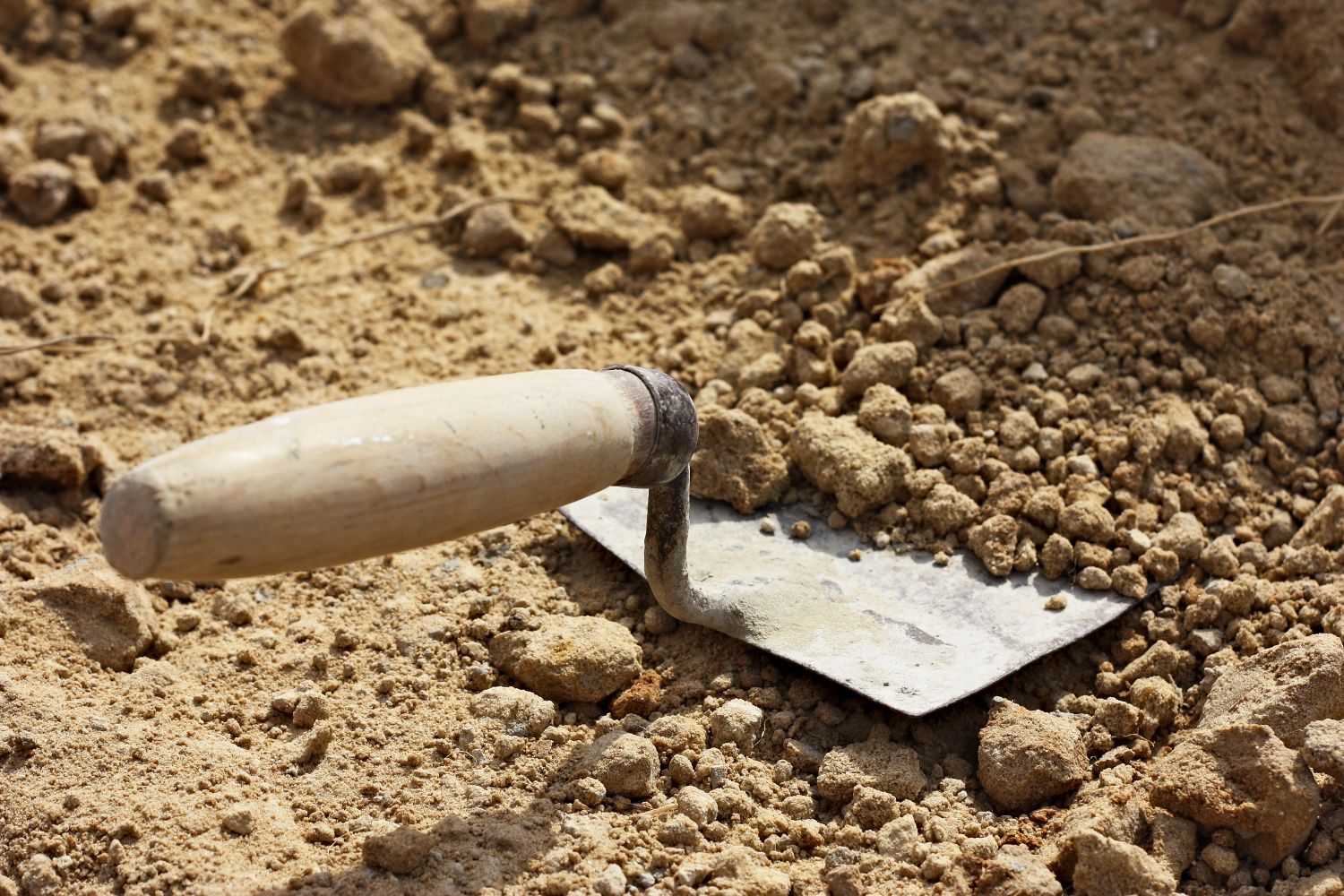
These tools connect modern workers to a long lineage of craft. A stonemason shaping limestone today uses techniques and tools similar to those used on medieval cathedrals. That continuity matters in an industry built on experience.
Even as materials evolve, the tools to work them often remain unchanged. Timber framing still relies on chisels and mallets. Stonework still demands hand tools for final shaping. Tile cutting, plastering and joinery all depend on tools whose forms were established centuries ago. Technology enhances speed and safety, but the final responsibility for quality still rests with human judgement.
What’s striking is not that modern builders still use ancient tools, but that those tools were so well designed in the first place. They represent an intuitive understanding of physics, ergonomics and material behaviour.
In a world obsessed with innovation, construction quietly demonstrates a different truth - that progress doesn’t always mean replacement. Sometimes it means recognising when something is already as good as it gets.
Every time a builder checks a plumb line, smooths mortar with a trowel or marks out a cut with a square, they are participating in a tradition thousands of years old. These tools have survived empires, revolutions and technological upheaval because they continue to do their job flawlessly.
Modern construction may be powered by software and machinery, but it is still guided by hands holding tools shaped by history. In the end, the persistence of ancient tools reminds us of something fundamental, that buildings are not created by technology alone. They are built by people, using tools that feel right in the hand and always have.
Additional Articles
The 3,000-Year History of Scaffolding
The basic idea behind scaffolding is far older than steel, standardised fittings or modern health and safety. In fact, the first scaffolds were probably nothing more sophisticated than wooden poles...
Read moreThe Victorian ventilation revolution and what we forgot
Long before air conditioning, Victorian architects were designing buildings around a problem that has returned with a vengeance. How do you keep large, crowded buildings supplied with fresh air...
Read more
Why Georgian houses have surprisingly thin walls
Walk into a Georgian townhouse and the proportions can feel almost impossibly elegant. Tall windows, narrow façades and beautifully ordered brickwork give the impression of lightness. Yet behind that...
Read more