
The safety net that changed construction
In the early 1930s, building a bridge across the entrance to San Francisco Bay was considered one of the most dangerous engineering challenges in the world. The winds were fierce, the currents unforgiving and the drop from the structure to the water below was enough to make even experienced ironworkers uneasy. Yet the construction of the Golden Gate Bridge would not only become one of the most recognisable engineering achievements in history - it would also quietly revolutionise construction safety.
Before this project, safety standards in construction were minimal by modern expectations. Hard hats were not yet widely used and workers operating hundreds of feet above the ground or water often relied on little more than balance, skill and a degree of bravery that today seems astonishing. Falls were one of the leading causes of death on major construction projects and they were often accepted as an unfortunate, but inevitable part of the job.
Joseph Strauss, the chief engineer of the Golden Gate Bridge, was determined to change that. Strauss believed that protecting workers was not only the right thing to do, but also essential to maintaining productivity and morale on such a massive project. As construction began in 1933, he introduced a range of safety measures that were considered radical at the time.
The first safety net
The most famous of these was a large safety net suspended beneath the bridge deck, stretching between the towers and extending out beyond the working areas. The net acted as a final line of defence for workers who slipped or lost their footing while working on the steel structure high above the water. It proved its worth almost immediately.
During the course of construction, the net caught 19 men who would almost certainly have fallen to their deaths. These workers later became known as members of the “Halfway to Hell Club” - a nickname that reflected the terrifying experience of falling from the bridge, but surviving because of the net below. For them, the safety net was more than a precaution; it was the difference between life and death.
The net was not perfect. Near the end of the project, a tragic accident occurred when a section of scaffolding collapsed, tearing part of the net away and resulting in several fatalities. Even so, the presence of the net had already proven that thoughtful safety measures could dramatically reduce risk on large construction projects.
The success of the Golden Gate Bridge safety system helped shift attitudes across the construction industry. Engineers, contractors, and governments began to recognise that safety planning was not a luxury or an obstacle to progress - it was a critical part of responsible construction. The idea that workers deserved protection while performing dangerous tasks slowly became embedded in project planning.
Fall arrest systems
Over time, safety nets evolved alongside other innovations in protective equipment. Modern construction sites now use sophisticated fall-arrest systems, harnesses, guardrails and highly engineered netting systems designed to absorb impact and prevent serious injury. Today’s safety nets are manufactured from high-strength synthetic materials and are carefully installed according to strict regulatory standards.
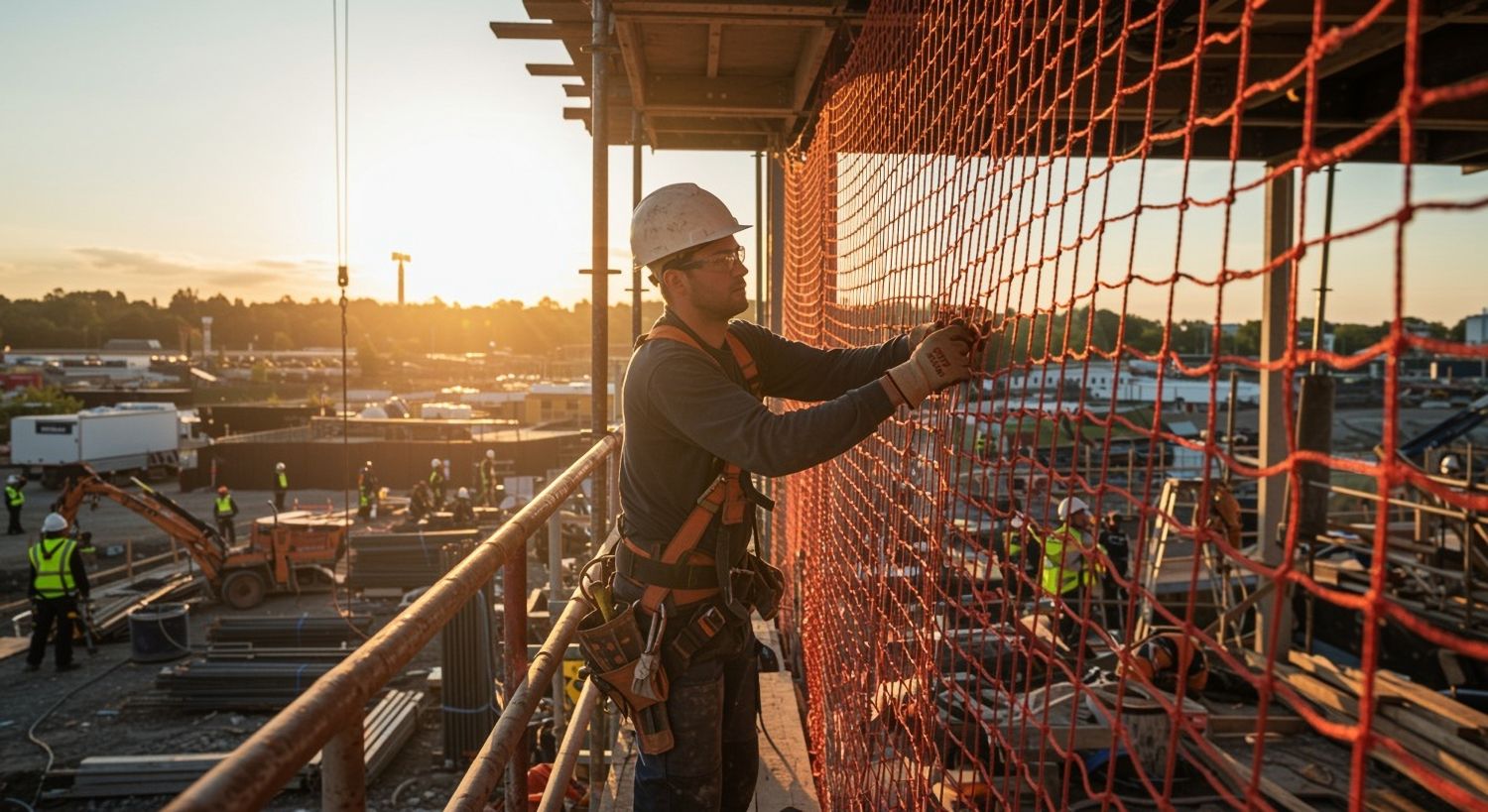
However, despite these technological advances, the principle remains the same as the one Strauss championed in the 1930s - when people work at height, there must always be a safety system ready to catch them if something goes wrong.
Construction will always involve risk. The industry builds at scale, often in challenging environments and with heavy materials and complex structures. But the story of the Golden Gate Bridge reminds us that progress in construction is not just about bigger structures or faster methods. It is also about learning how to protect the people who build them.
Those 19 workers who fell into the net during the construction of the bridge became part of an unusual club. Their experience was frightening, no doubt, but it also demonstrated something important - safety measures can work, and when they do, they save lives.
Today, every time a safety net is installed beneath a high-rise building, bridge deck, or stadium roof, it carries forward a legacy that began on the windswept towers of the Golden Gate Bridge nearly a century ago.
Additional Articles

The 3,000-Year History of Scaffolding
The basic idea behind scaffolding is far older than steel, standardised fittings or modern health and safety. In fact, the first scaffolds were probably nothing more sophisticated than wooden poles...
Read moreThe Victorian ventilation revolution and what we forgot
Long before air conditioning, Victorian architects were designing buildings around a problem that has returned with a vengeance. How do you keep large, crowded buildings supplied with fresh air...
Read more

Why Georgian houses have surprisingly thin walls
Walk into a Georgian townhouse and the proportions can feel almost impossibly elegant. Tall windows, narrow façades and beautifully ordered brickwork give the impression of lightness. Yet behind that...
Read more