
The early roots of renewable energy in construction
Renewable energy may feel like a modern concept, closely tied to climate targets, smart buildings and the push for net-zero construction. Yet the idea of harnessing natural energy sources is far older than most people realise. Long before the invention of fossil-fuel power stations or modern electrical grids, civilisations were already capturing energy from wind, water and sunlight to power buildings, communities and industries.
In many ways, the construction sector is rediscovering principles that builders understood centuries ago. Early renewable technologies were simple, but they demonstrate how people designed structures and infrastructure to work with nature rather than against it. Today’s architects and engineers are applying the same mindset again - this time supported by advanced materials, digital modelling and sophisticated energy systems.
Understanding the earliest examples of renewable energy offers a fascinating insight into how far the industry has come and why these historic innovations still influence modern construction.
The First Renewable Infrastructure
One of the earliest and most widespread forms of renewable energy was water power. Ancient civilisations recognised that moving water contained tremendous potential energy and they developed systems to harness it for mechanical work.
The Greeks and Romans were among the first to use water wheels on a large scale. These devices converted the kinetic energy of flowing water into rotational motion, which could be used to grind grain, saw timber or operate simple machinery. Water mills became common throughout Europe during the Roman period and expanded significantly during the medieval era.
By the Middle Ages, water mills were central to many communities. Entire settlements were often planned around rivers and streams to take advantage of this renewable power source. In effect, these mills represented early examples of energy infrastructure integrated into the built environment.
From a construction perspective, water-powered systems required careful engineering. Builders had to design mill races, sluice gates and structural foundations that could withstand constant exposure to water. The construction of dams and channels also demonstrated a growing understanding of hydrology and structural stability.
Modern hydroelectric dams may operate on a much larger scale, but the basic principle remains unchanged - converting the energy of moving water into usable power. The early water mills laid the groundwork for today’s renewable energy generation systems.
Engineering the First Energy Machines
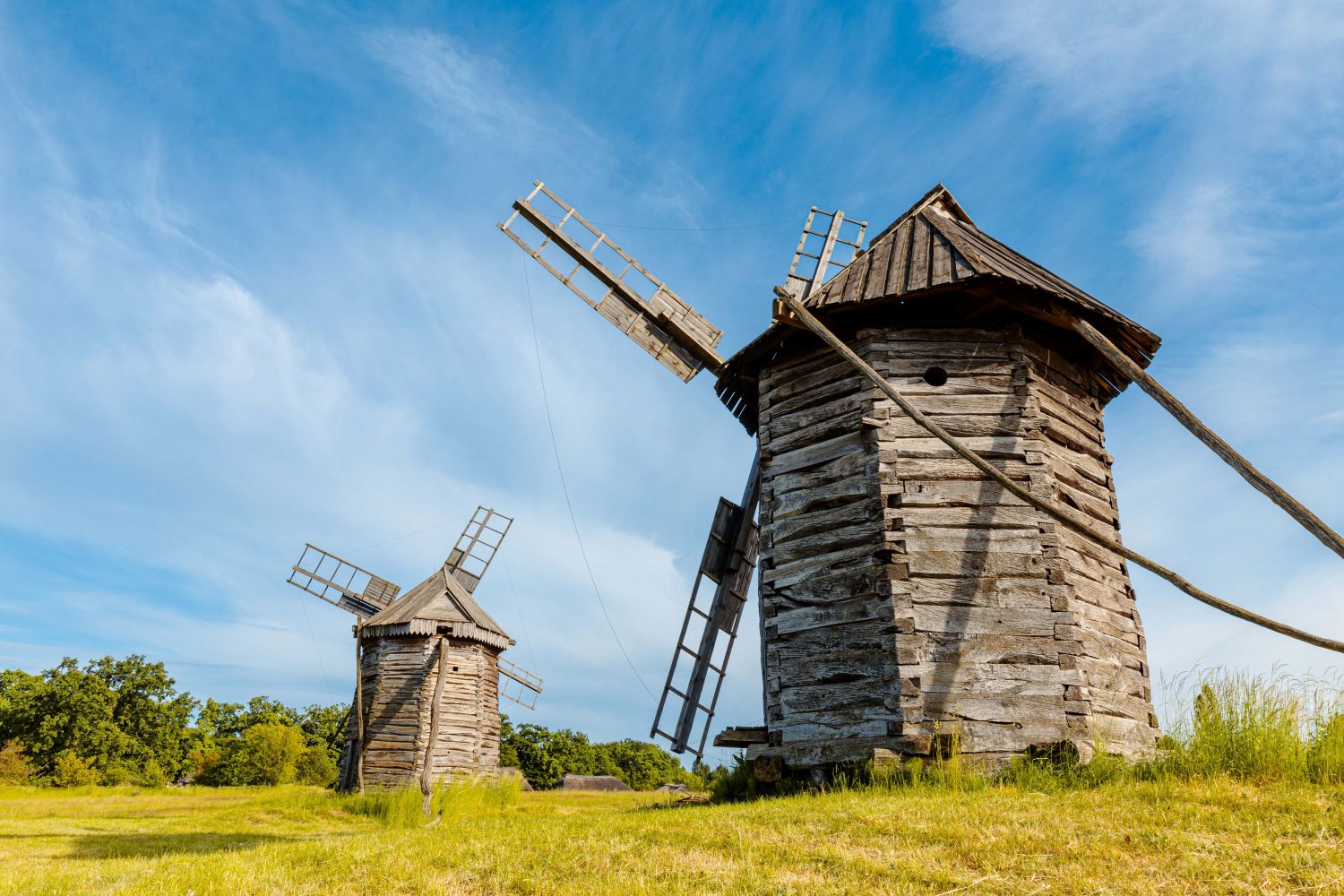
Wind power is another ancient renewable energy technology that influenced construction practices. Some of the earliest windmills appeared in Persia around the 7th century, where vertical-axis windmills were used to grind grain and pump water.
These early machines spread across the Middle East and eventually reached Europe, where they evolved into the more familiar horizontal-axis windmills seen in countries such as the Netherlands and England. By the 12th century, windmills had become common features in rural landscapes.
Constructing a windmill was no simple task. Builders had to create structures capable of supporting heavy rotating machinery while also resisting strong winds. Timber frames were reinforced to absorb mechanical stresses, while rotating caps allowed the sails to face changing wind directions.
Windmills also influenced the design of surrounding buildings. Mill towers needed strong masonry foundations and careful structural planning to remain stable during operation. Many of these structures were early demonstrations of how renewable energy systems could be integrated directly into the built environment.
Today’s modern wind turbines may reach heights of over 200 metres and generate megawatts of electricity, but they still rely on the same principle - capturing wind energy and converting it into mechanical or electrical power. The basic concept first demonstrated by early windmills continues to shape renewable infrastructure today.
Ancient Energy Efficiency
While water and wind technologies generated mechanical power, many early builders also learned how to use sunlight to improve building performance. Passive solar design is one of the oldest forms of renewable energy use in construction.
Ancient Greek and Roman architects carefully oriented buildings to maximise natural light and warmth. Homes were often designed with south-facing courtyards to capture winter sunlight while providing shade during the summer months. Thick stone walls helped regulate indoor temperatures by absorbing heat during the day and releasing it slowly at night.
In China, traditional courtyard houses were designed to balance sunlight, ventilation and protection from harsh weather. Similar principles were also used in Middle Eastern architecture, where narrow streets, shaded courtyards and wind towers helped regulate indoor climates without mechanical systems.
These designs demonstrate an early understanding of building physics and environmental design. Rather than relying on external energy sources, buildings themselves were designed to work in harmony with their climate.
Modern sustainable construction increasingly draws inspiration from these historical approaches. Passive solar design is now widely used in energy-efficient housing, where building orientation, glazing placement and thermal mass are carefully planned to reduce heating and cooling demands.
The Original Renewable Fuel
Another important early renewable energy source was biomass. Wood and plant materials were used for heating, cooking and industrial processes for thousands of years. Although biomass combustion releases carbon, it is considered renewable because plants can regrow and absorb carbon dioxide during their life cycle.
In pre-industrial societies, biomass was often the primary source of energy. Wood-burning stoves, charcoal kilns and biomass furnaces powered homes, workshops and small industries.
Construction methods often reflected this reliance on biomass fuel. Chimneys, hearths and ventilation systems were carefully integrated into building designs to manage smoke and heat safely.
Today, biomass energy remains an important renewable resource in many parts of the world, particularly when combined with modern efficiency technologies and sustainable forestry practices.
Lessons for the Modern Construction Industry
The historical use of renewable energy highlights an important lesson, that energy efficiency and environmental design have always been part of construction thinking.
For centuries, builders worked with natural forces to create structures that were functional, durable and resource-efficient. These early renewable systems may have been simple compared to modern technologies, but they demonstrate a fundamental principle that remains highly relevant today.
Modern construction is now facing significant pressure to reduce carbon emissions and improve energy performance. Buildings account for a substantial portion of global energy consumption and greenhouse gas emissions, making sustainable design a priority for governments, developers and architects.
Renewable energy systems are now being integrated into buildings in ways that would have been unimaginable to earlier generations. Solar panels, geothermal heating systems, advanced insulation materials and smart building technologies are transforming how structures generate and consume energy.
Yet many of these innovations still reflect ideas that ancient builders understood instinctively - capture natural energy wherever possible and design buildings to respond to their environment.
The Future of Renewable Energy in Construction
As the construction industry moves toward net-zero targets, renewable energy will play an increasingly central role in building design and infrastructure planning.
New developments are now incorporating solar panels directly into façades and roofing systems. Wind energy is being explored through building-integrated turbines, while geothermal systems are providing low-carbon heating solutions for large residential developments.
At the same time, passive design strategies are making a strong comeback. Architects are once again focusing on orientation, shading, ventilation and thermal mass to reduce reliance on mechanical energy systems.
In many ways, modern sustainable construction is reconnecting with ideas that are thousands of years old. The technologies may be new, but the philosophy is familiar - work with nature, harness its energy and build structures that are resilient for generations.
The earliest renewable energy systems may have been modest in scale, but their influence continues to shape the construction industry today. They remind us that sustainable building is not a new idea - it is a tradition that modern engineers and architects are rediscovering as they design the buildings of the future.
Additional Articles

The 3,000-Year History of Scaffolding
The basic idea behind scaffolding is far older than steel, standardised fittings or modern health and safety. In fact, the first scaffolds were probably nothing more sophisticated than wooden poles...
Read moreThe Victorian ventilation revolution and what we forgot
Long before air conditioning, Victorian architects were designing buildings around a problem that has returned with a vengeance. How do you keep large, crowded buildings supplied with fresh air...
Read more

Why Georgian houses have surprisingly thin walls
Walk into a Georgian townhouse and the proportions can feel almost impossibly elegant. Tall windows, narrow façades and beautifully ordered brickwork give the impression of lightness. Yet behind that...
Read more