
Why Paint Booth Efficiency Has Become a Manufacturing Bottleneck in 2026
Your production line always seems to run smoothly until painted parts start piling up at the booth. While you've optimized fabrication and assembly, outdated access equipment and rising quality standards have turned your paint booth into a throughput constraint. Labor shortages only make the problem worse, forcing smaller crews to work with the same inefficient tools.
The Paint Booth Problem Hiding in Your Production Line
Your paint booth may be the constraint holding back your operation, even if upstream fabrication and assembly run efficiently. This issue affects manufacturing facilities across industries in 2026. When other stations produce faster than your booth can finish, painted components build up in the backlog, limiting your overall output.
Three Root Causes Behind Your Paint Booth Slowdown
Three things create this bottleneck. You can't find enough skilled painters, quality standards keep climbing and most facilities still use access equipment that slows everyone down.
Why Skilled Painters Are Harder to Find
Manufacturing labor shortages are hitting skilled trades like painting especially hard. Adding a shift to fix a bottleneck requires qualified painters you may not have on hand. The U.S. manufacturing industry could need to fill 3.8 million jobs by 2033. However, 1.9 million jobs may go unfilled without addressing skills and applicant gaps.
The shortfall stems from both retirements and industry growth. When 65% of manufacturers cite attracting and retaining talent as their primary business challenge, the paint booth labor gap represents a fundamental workforce issue.
Why Quality Standards Keep Climbing
Finish quality expectations around consistency, compliance and environmental standards are rising. Regulatory pressure has pushed coatings toward stricter compliance standards for volatile organic compounds (VOCs) across the industry. Zero-VOC paints contain no more than 5 grams per liter, while low-VOC paints contain no more than 50 grams per liter. Maintaining quality standards requires time, and cutting corners creates rework that compounds the bottleneck.
Why Ladders and Scaffolding Slow You Down
Many facilities still rely on ladders, scaffolding or manually repositioned platforms for booth access. Ladders work fine for occasional maintenance tasks, but they weren't built for painters who climb up and down dozens of times a shift. In 2020, there were 161 workplace fatalities from ladders, with 22,710 nonfatal injuries. Installation, maintenance and repair, construction and extraction, and service occupations were hit the hardest. Beyond the safety risk, constant repositioning and awkward reach positions slow your throughput.
How Modern Facilities Are Closing the Gap
Forward-looking facilities are taking action before labor market conditions improve. They're investing in equipment upgrades that reduce dependency on manual labor, cut rework and speed up booth access. You have control over how efficiently your current painters work, regardless of how many qualified painters enter the market.
Equipment Upgrades That Can Help You Keep Pace
LPI Lift Systems manufactures personnel lifts for indoor paint booths, offering both standard, pre-engineered and fully customized configurations. For indoor paint booths, the best man lift configuration depends on the booth layout, task frequency and how operators need to move around the workpiece.
LPI lift platforms provide ergonomic access that may help reduce reaching and stretching, supporting safer workflows for operators working at height. All LPI products are factory tested before shipping and made in the United States. These three configurations address common access needs in surface-finishing environments.
Best for Fixed Paint Booth Access — Stationary Pneumatic Scissor Lift
The SPHF Series provides stable elevation through a floor-mounted design. This pneumatic-hydraulic lift provides consistent positioning for surface-finishing tasks. The fixed installation supports long-term reliability in industrial environments where operators need repeatable access to the same work areas.
Best for Repositioning Along a Booth — Manually Positioned Scissor Lift
The SPHT Series combines pneumatic-hydraulic elevation with manual positioning capability. Built for mobility between work areas, this scissor lift provides stable access for operators who need to reposition equipment along a booth or production line. The transport handle allows operators to move the lift as workflow demands change.
Best for Conveyor-Driven Finishing Lines — Powder Coating Vestibule Lift
LPI designed the VL Series for conveyor-driven finishing operations. This lift provides vertical reach for operators performing coating, touch-up or inspection tasks along production lines. The design integrates with conveyor systems to support continuous workflow in high-productivity manufacturing environments.
Frequently Asked Questions
Below are common questions about paint booth bottlenecks and solutions.
What causes bottlenecks in a paint booth?
Labor shortages limit staffing flexibility, rising quality standards demand more time per part, and outdated access equipment slows painters down. These three root causes drive most bottlenecks.
How can you improve paint booth efficiency without hiring more painters?
Upgrading your access equipment gives you more control than hoping the labor market improves. Modern access systems reduce the time painters spend repositioning equipment, while updated booth systems improve finish consistency and reduce rework.
What equipment upgrades reduce paint booth downtime?
Access systems, such as personnel lifts, can eliminate or ease manual repositioning and support ergonomic workflows. Modern booth systems with updated airflow control can improve finish quality and reduce rework cycles.
Keeping Your Paint Booth Ahead of the Bottleneck
Paint booth efficiency requires proactive investment. Facilities that invest in equipment now position themselves better as labor and quality pressures continue. Evaluate your booth setup to identify outdated access methods or aging systems that may be limiting capacity, then prioritize upgrades to address your specific constraints.
Additional Blogs

5 Construction Project Management Myths That Cost Crews Productive Time
Construction project management myths are pervasive, and the real cost is lost crew hours, not just lost money. Watch out for common misconceptions that can undermine your workforce's productivity...
Read moreThe Robotics as a Service Revolution Is Reshaping Warehouse Infrastructure Requirements
Warehouse operators now rent automation equipment instead of purchasing it outright. These robotics as a service models provide access to advanced machines without major capital investments. As...
Read more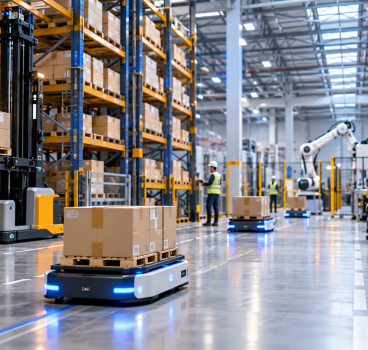

Is construction becoming brilliant at measuring everything except common sense
Construction has never had access to more information. We can track the progress of a project almost in real time. We can monitor costs, labour, productivity, programme performance, carbon, waste,...
Read more