
Why Venice still stands on wood after 1,000 years
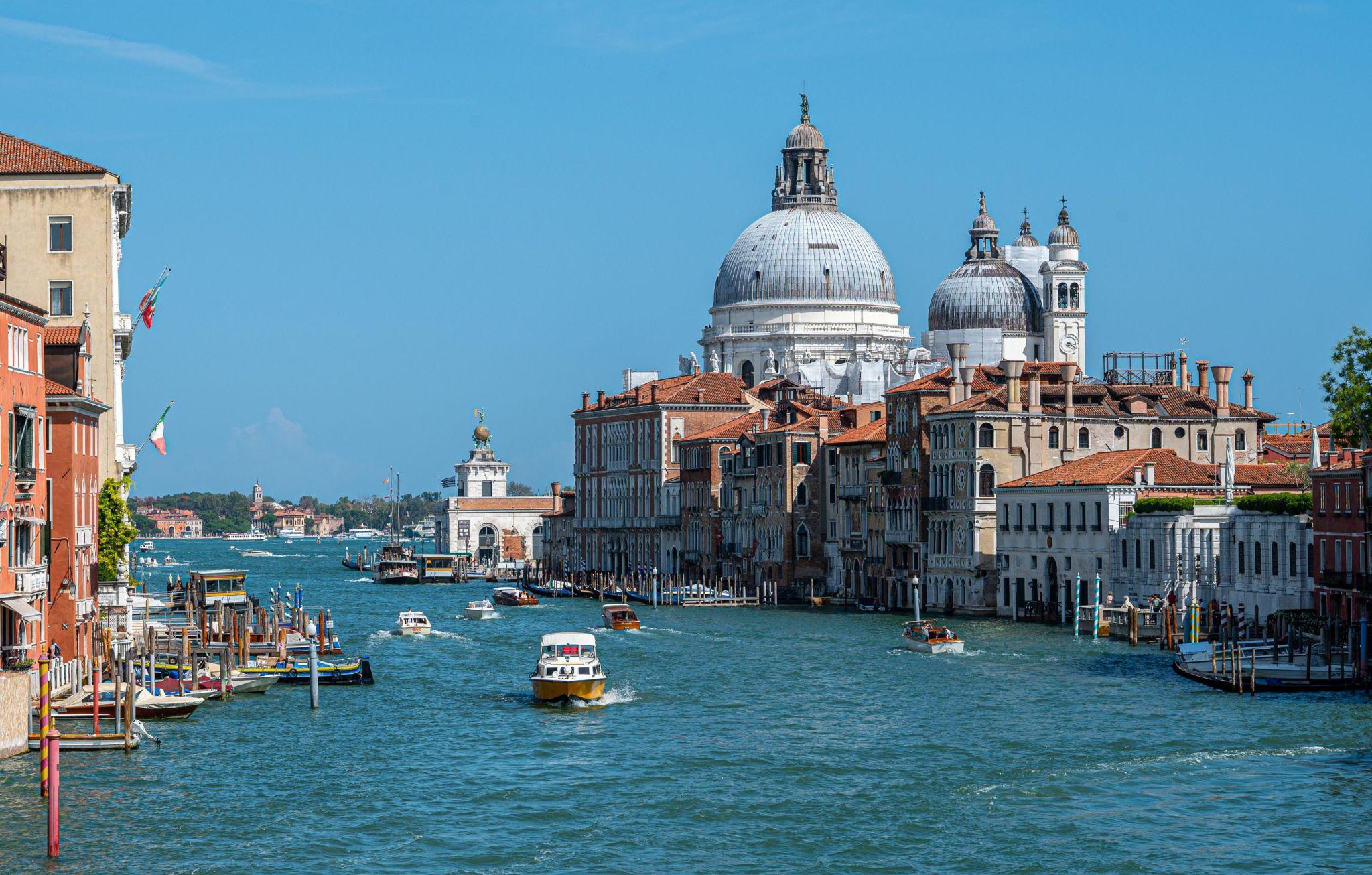
On paper, Venice makes no sense. It’s a city built not on rock, not on solid ground, but on mud, marsh and shifting lagoon sediments. No deep foundations. No bedrock. Just timber driven into wet ground more than a thousand years ago and yet, it stands.
Not only does it stand, but much of it stands on wooden piles that have not rotted, despite being submerged for centuries. It’s one of the most counterintuitive stories in construction and one that still challenges how we think about materials, durability and design.
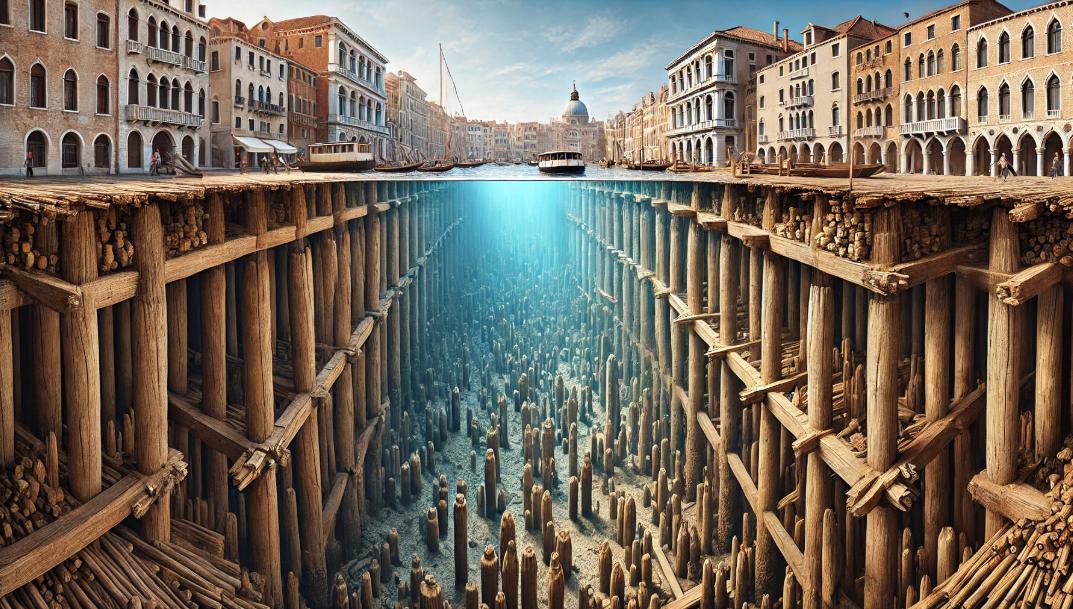
To understand Venice, you have to start below the surface. The city is supported by millions of timber piles driven vertically into the soft soils of the Venetian Lagoon. These piles were typically made from species such as alder, oak and larch, woods known for their durability and availability in the regions surrounding northern Italy and parts of Eastern Europe.
According to the UNESCO, Venice and its lagoon have been shaped by human ingenuity over centuries, with early builders developing foundation systems specifically adapted to the unstable, waterlogged ground.
Once driven into the sediment, these wooden piles were capped with horizontal timbers and then topped with stone platforms, often using dense Istrian limestone, which resists water penetration. Buildings were then constructed on top of this layered system. It sounds fragile, but it isn’t.
Why the Wood Didn’t Rot
The obvious question is the right one: Why hasn’t the wood decayed? The answer lies in a combination of chemistry, biology and environment. Wood rots when microorganisms, particularly fungi and bacteria, break down its cellular structure. but these organisms require oxygen to survive.
In Venice, the timber piles are driven deep into waterlogged, oxygen-poor soils. Once submerged and sealed within this environment, the wood is effectively protected from the biological processes that would normally cause decay.
Research referenced by the National Research Council of Italy explains that the anaerobic (low-oxygen) conditions of the lagoon sediments significantly inhibit microbial activity, preserving the timber over long periods.
In some cases, the wood has even undergone a process of mineralisation, where minerals from the surrounding water gradually infiltrate the timber, increasing its density and strength over time. So rather than weakening, parts of the foundation system have effectively become more robust.
This challenges a basic assumption in construction, that wood and water are a bad combination. In most contexts, they are. Timber exposed to cycles of wetting and drying, combined with oxygen exposure, will degrade over time. But Venice demonstrates that constant submersion in the right conditions can preserve timber almost indefinitely.
It’s not the presence of water that causes decay. It’s the presence of oxygen, moisture fluctuation and biological activity. Remove those variables, and the equation changes completely.
What makes this even more remarkable is that Venice was not built using modern geotechnical analysis or structural modelling. The foundations of the city began to take shape around the 5th century AD, as communities sought refuge from invasions on the mainland. Over time, builders refined techniques through observation and experience.
According to the Encyclopaedia Britannica, Venetian construction evolved as a response to environmental constraints, resulting in a system that distributed loads across a dense field of piles rather than relying on deep, singular supports.
This approach effectively spread the weight of buildings across a wide area, reducing settlement and increasing stability on soft ground. It was not calculated in the way we would today, but it worked.
The Role of Density and Distribution
One of the key factors in Venice’s longevity is not just the presence of wooden piles, but their number and arrangement. Millions of piles were driven close together, creating a dense, load-distributing platform. This reduced pressure on any single point and allowed the structure to “float” in a controlled way on the soft substrate. Modern foundation design uses similar principles.
Raft foundations, piled rafts and load distribution systems all aim to spread structural loads to reduce stress concentrations. Venice achieved this through sheer density and repetition. It is a reminder that sometimes, simple principles applied consistently can outperform complex solutions.
Despite the durability of its foundations, Venice is not without challenges. The city now faces threats not from the decay of its timber piles, but from rising sea levels, subsidence and environmental change.
According to the Intergovernmental Panel on Climate Change, coastal cities like Venice are increasingly vulnerable to flooding as global sea levels rise. Combined with historical subsidence caused by groundwater extraction in the 20th century, this has led to more frequent and severe high-water events, known locally as acqua alta.
In other words, the original construction method is not the problem. The changing environment is.
What Venice Teaches Us About Building with Context
There is a tendency in modern construction to apply standardised solutions across different environments. Venice is the opposite of that. It is entirely context-driven.
Every aspect of its construction, the materials, methods and form, was shaped by the conditions of the lagoon. Builders didn’t try to impose a solution onto the environment. They adapted to it. That mindset is increasingly relevant today.
As construction faces challenges around climate, sustainability and resource use, there is growing recognition that context matters more than ever. What works in one environment may not work in another and sometimes, the most effective solutions are not the most obvious ones.
Venice also forces a reconsideration of how we think about materials. Wood is often seen as temporary, vulnerable or less durable than concrete or steel. Yet in the right conditions, it has outlasted both.
This aligns with modern interest in timber construction, particularly engineered timber products such as cross-laminated timber (CLT), which are being used in increasingly ambitious structures. The difference is not just the material. It is how the material is used, protected and integrated into the environment.
Perhaps the most important lesson from Venice is this: The builders did not rely on assumptions. They observed. They adapted. They refined their approach over time. They understood the behaviour of materials in their environment, even if they couldn’t explain it scientifically and they built accordingly.
Venice should not exist. By conventional logic, it should have failed centuries ago. Instead, it stands as one of the most enduring examples of building with, rather than against, the environment.
The wooden piles beneath the city are not just a historical curiosity. They are a reminder that durability is not always about using the strongest material. Sometimes, it is about using the right material, in the right way, in the right place and when that happens, even a city built on mud can last a thousand years.
Frequently Asked Questions
1. Why doesn't Venice sink?
Venice doesn't sink because its buildings are supported by millions of closely spaced timber piles driven deep into soft lagoon sediments. These piles distribute the weight of the buildings across a large area, creating stable foundations despite the soft ground.
2. Why haven't Venice's wooden foundations rotted?
The timber piles remain intact because they are permanently submerged in oxygen-poor (anaerobic) sediments. Without oxygen, the fungi and microorganisms that normally cause wood decay cannot survive, allowing the timber to last for centuries.
3. What type of wood was used to build Venice?
Venice's foundations were typically constructed using durable timber species including alder, oak and larch. These woods were readily available in northern Italy and neighbouring regions and were well suited to submerged foundation construction.
4. How many wooden piles support Venice?
Although exact numbers are unknown, historians estimate that millions of timber piles support the city beneath its buildings, bridges and historic structures, forming one of the world's largest timber foundation systems.
5. How were the foundations of Venice constructed?
Builders drove thousands of timber piles into the lagoon bed before laying horizontal timbers and dense limestone platforms on top. Buildings were then constructed above this foundation system, spreading loads evenly across the soft ground.
6. What can modern engineers learn from Venice?
Venice demonstrates the importance of designing for local ground conditions. Its foundations show how understanding materials, load distribution and environmental conditions can create structures that remain stable for over a thousand years.
7. Is timber suitable for modern foundation construction?
Yes. Timber piles are still used in some engineering applications where ground conditions are suitable. When permanently submerged below the water table, timber can remain durable for extremely long periods under the right environmental conditions.
8. Why is oxygen important in wood decay?
Wood decays when fungi and bacteria break down its fibres, but these organisms require oxygen to survive. Permanently waterlogged, oxygen-free conditions significantly slow or prevent this biological decay process.
9. Is Venice's greatest threat its foundations?
No. Modern experts believe Venice's biggest challenges are rising sea levels, flooding, land subsidence and climate change rather than the deterioration of its original timber foundations, many of which remain remarkably well preserved.
10. How does Venice compare with modern foundation engineering?
Modern engineers use piled foundations, raft foundations and load distribution systems based on similar principles. Venice demonstrates that spreading structural loads across many foundation points can provide exceptional long-term stability on weak ground.
11. What is mineralisation in timber?
Mineralisation occurs when minerals carried in groundwater gradually penetrate submerged timber, increasing its density and helping preserve the wood over long periods. This process has contributed to the remarkable longevity of some of Venice's foundation piles.
12. Why is Venice considered one of history's greatest engineering achievements?
Venice combines innovative foundation engineering, environmental adaptation and centuries of practical construction knowledge. Building an entire city on soft lagoon sediments using timber foundations remains one of the most extraordinary civil engineering accomplishments ever achie
Additional Articles

Who decided what a building should cost?
Every construction project begins with a question that can determine whether it proceeds at all - how much will it cost? Today, clients expect detailed cost estimates, contractors submit tenders...
Read moreThe History of Britain’s Indoor Plumbing Revolution
Today, flushing a toilet is one of the most unremarkable actions in modern life. We turn a handle or press a button, the waste disappears and we get on with our day. For most people in Britain,...
Read more

The 3,000-Year History of Scaffolding
The basic idea behind scaffolding is far older than steel, standardised fittings or modern health and safety. In fact, the first scaffolds were probably nothing more sophisticated than wooden poles...
Read more