
The hidden history of sabotage in construction
Construction has always been competitive. Today, that competition plays out through bids, tenders, pricing strategies and programme delivery. It is structured, regulated and at least in theory, transparent, but it hasn’t always looked like that.
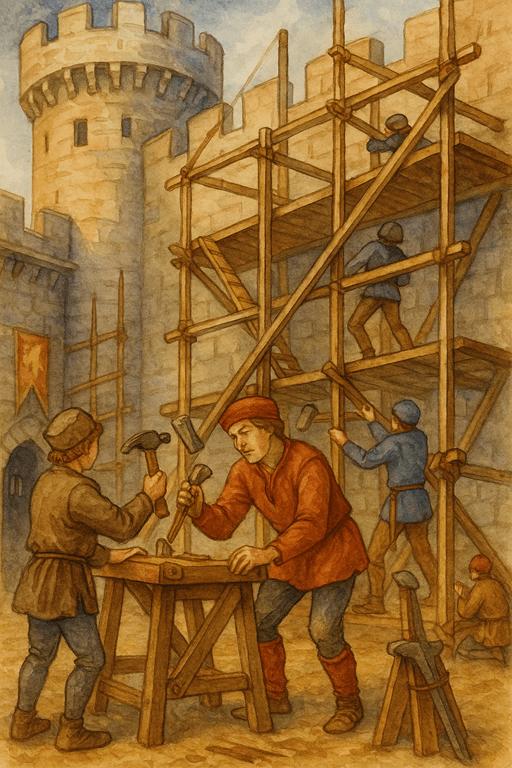
In earlier periods of construction history, competition could take a far more direct and sometimes darker form. Rival builders didn’t just try to outbid each other or deliver better work. They sometimes actively tried to undermine each other’s projects. Sabotage, whether subtle or overt, has been part of the construction story for centuries.
To understand why this happened, you have to look at how construction was organised. Before modern procurement systems, projects were often awarded based on reputation, patronage or direct relationships. Guilds, master builders and local craftsmen, controlled access to work and that control could be fiercely protected.
According to research referenced by the Encyclopaedia Britannica, medieval construction was dominated by guild systems that regulated trades, controlled quality and limited who could operate within a particular area. That structure created both stability and tension.
If work was scarce or prestige was at stake, particularly on major civic or religious projects, rivalry intensified and without the legal frameworks we rely on today, disputes could spill into more practical forms of interference.
Cathedrals, Status and High Stakes
Some of the most intense rivalries occurred during the construction of medieval cathedrals. These were not just buildings. They were symbols of wealth, power and civic pride. Cities competed with each other to build larger, more impressive structures. Builders, in turn, competed for influence and recognition.
According to the Smithsonian Institution, cathedral construction could span decades or even centuries, involving multiple generations of craftsmen and changing leadership over time. This created opportunities for conflict.
While direct evidence of sabotage is often anecdotal rather than formally recorded, historical accounts suggest that disputes between rival groups of masons and builders could lead to deliberate disruption, from withholding knowledge to interfering with materials or workmanship.
In a world without modern documentation or accountability, proving intent was difficult, but the consequences were real.
By the time construction entered the industrial era, the nature of sabotage began to change. It was no longer just about rival builders. It became tied to labour, technology and social change.
The rise of mechanisation in the 18th and 19th centuries brought new tensions. Workers feared that machines would replace their skills and livelihoods.
The Luddite movement is one of the most well-known examples. While primarily associated with textile industries, the broader principle applied across sectors: resistance to change sometimes manifested as the deliberate destruction or disruption of work.
According to the UK National Archives, sabotage during this period was often driven by economic pressure and uncertainty rather than personal rivalry alone. In construction, similar tensions could emerge where new methods or contractors threatened established practices.
Subtle Sabotage: The Harder Reality
Not all sabotage was dramatic. In many cases, it was subtle with small actions that were difficult to prove and easy to overlook.
- Deliberately poor workmanship
- Incorrect installation
- Miscommunication of details
- Withholding critical information
These actions don’t always appear as sabotage on the surface. They can be dismissed as error, oversight or misinterpretation, but in competitive environments, the line between mistake and intent can become blurred.
Modern research into construction performance highlights how miscommunication and coordination failures are among the leading causes of defects. According to studies by McKinsey & Company, fragmentation and lack of alignment across project teams contribute significantly to inefficiency and rework.
While not sabotage in the traditional sense, the effect can be similar. In such cases work is compromised, progress is slowed and costs increase.
Why Sabotage Happens
At its core, sabotage is rarely about the act itself. It is about pressure to win work, maintain status, to protect livelihoods and to deliver under unrealistic conditions.
When these pressures combine with poor communication, unclear responsibility or lack of accountability, the conditions for conflict are created. Historically, those conflicts were sometimes expressed directly.
Today, they are more likely to appear indirectly, through breakdowns in coordination, disputes over scope or defensive behaviours between parties.
What Has Changed and What Hasn’t
Modern construction is far more regulated than it once was. Contracts define responsibilities. Standards define quality. Legal frameworks provide recourse when things go wrong.
This has reduced the likelihood of overt sabotage, but it hasn’t eliminated conflict. The industry is still complex. Still fragmented. Still under pressure and where there is pressure, there is always the potential for behaviour that prioritises short-term advantage over long-term outcome.
The greatest risk is not deliberate sabotage in its historical sense. It is something more subtle. A lack of alignment. When teams are not working towards a shared objective, when communication breaks down and when responsibilities are unclear, projects begin to fail in small ways. Those failures accumulate and the result can look very similar to intentional disruption.
From Rivalry to Collaboration
If there is a lesson in this history, it is this: Construction works best when competition ends at the point of delivery. Winning the project is one thing, but delivering it successfully requires collaboration.
That means:
- Clear communication
- Defined responsibilities
- Shared understanding of outcomes
- Trust between teams
Without these, even the most well-planned projects can unravel.
The idea that rival builders once sabotaged each other’s work may sound like a relic of the past. Something that belongs to a less structured, less regulated industry, but the underlying drivers - pressure, competition and misalignment - are still very much present.
The difference is how they are managed. Because whether it is deliberate or accidental, the outcome is the same: When teams stop working together, the project suffers and in construction, that is one thing no one can afford.
Additional Articles
Who decided what a building should cost?
Every construction project begins with a question that can determine whether it proceeds at all - how much will it cost? Today, clients expect detailed cost estimates, contractors submit tenders...
Read moreThe History of Britain’s Indoor Plumbing Revolution
Today, flushing a toilet is one of the most unremarkable actions in modern life. We turn a handle or press a button, the waste disappears and we get on with our day. For most people in Britain,...
Read more

The 3,000-Year History of Scaffolding
The basic idea behind scaffolding is far older than steel, standardised fittings or modern health and safety. In fact, the first scaffolds were probably nothing more sophisticated than wooden poles...
Read more