
How early engineers aligned tunnels without GPS
It feels like something that shouldn’t have worked. Two teams start digging from opposite ends of a mountain. No satellite positioning. No digital models. No real-time communication. Just hand tools, basic surveying instruments and a shared objective to meet in the middle - and somehow - they did.
Not always perfectly, but often with a level of accuracy that still feels remarkable today. Early tunnelling projects achieved alignments that, even by modern standards, demand respect. It therefore raises an obvious question - how did they do it?
Tunnelling has always been a high-risk activity. Unlike building above ground, where errors can often be corrected visually, tunnelling happens out of sight. Once excavation begins, mistakes compound quickly. A slight deviation at the start can become a major misalignment hundreds of metres later.
According to the Institution of Civil Engineers, early tunnel projects required careful planning and surveying because the cost of failure was not just financial, it could render an entire project unusable.
If two headings missed each other, even by a small margin, the consequences were significant, so accuracy wasn’t optional, it was essential.
The Siloam Tunnel: A 2,700-Year-Old Example
One of the most famous examples comes from ancient Jerusalem. The Siloam Tunnel, constructed around the 8th century BCE during the reign of King Hezekiah, was excavated from both ends to bring water into the city. What makes it extraordinary is not just its age, but its execution.
The tunnel is approximately 533 metres long, and the two teams met with only a small deviation. An inscription discovered inside the tunnel, known as the Siloam Inscription, describes the moment the two groups finally heard each other and broke through.
Research referenced by the Israel Antiquities Authority suggests that the builders likely followed natural fissures in the rock while maintaining a general directional alignment, allowing them to converge successfully. It wasn’t perfectly straight, but it worked.
Surveying Without Technology
So how did early engineers control direction underground? The answer lies in a combination of surface surveying and underground approximation.
Before excavation began, surveyors would establish a line above ground using basic geometric methods. Instruments such as the groma, used by Roman engineers, allowed them to set out straight lines and right angles with surprising accuracy.
According to the Encyclopaedia Britannica, Roman surveying relied heavily on geometry, sightlines and simple tools to create remarkably precise layouts for roads, aqueducts and tunnels.
Once the alignment was established on the surface, vertical shafts were often sunk at intervals along the route. These shafts served multiple purposes by:
- Providing ventilation
- Removing excavated material
- Acting as reference points to check alignment
From these shafts, builders could measure and correct direction as excavation progressed.
Working Underground: Sound, Feel and Judgement
Below ground, things became more uncertain. Without visual reference points, tunnel teams relied on a mix of measurement, experience and, in some cases, sound. Historical accounts suggest that in certain projects, workers would listen for the sound of tools from the opposing team, adjusting their direction accordingly as they got closer.
This is referenced in descriptions of the Siloam Tunnel, where the inscription notes that the breakthrough occurred when the sound of the other group became audible. It’s a reminder that alignment wasn’t just mathematical, it was also sensory.
Roman Precision: The Furlo Tunnel
By the Roman period, tunnelling techniques had become more refined. The Furlo Tunnel, constructed along the Via Flaminia in Italy, demonstrates the level of precision Roman engineers could achieve.
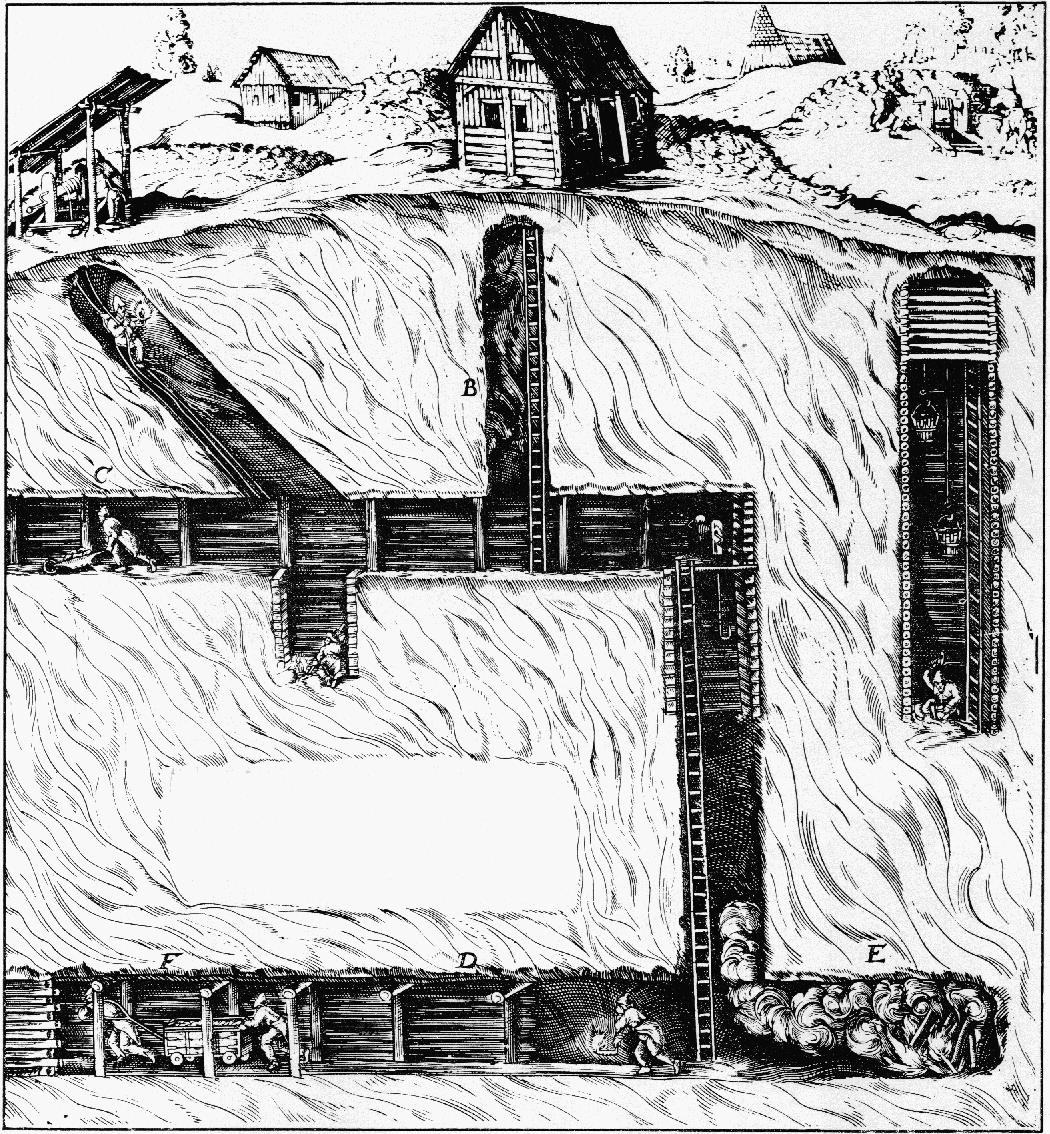
According to studies cited by the American Society of Civil Engineers, Roman tunnels often used a combination of surface alignment, vertical shafts and careful measurement to ensure that excavation headings met accurately.
The process was methodical. Survey above ground. Transfer that alignment below ground. Check, adjust and repeat. It wasn’t fast, but it was effective.
Margins of Error and Why They Worked
It’s important to recognise that early tunnels were not perfectly aligned in the way we might expect today. Small deviations were common, but these were often absorbed within the design.
Tunnel widths allowed for slight misalignments. Final connections could be adjusted manually. In some cases, the meeting point between two headings is visibly irregular, a physical record of the moment precision gave way to practicality. What mattered was not perfection. It was connection.
What We Do Differently Today
Modern tunnelling uses technologies that early builders could not have imagined. GPS, laser guidance systems, digital modelling and tunnel boring machines (TBMs) allow for alignment with millimetre-level accuracy over kilometres.
According to the International Tunnelling and Underground Space Association, contemporary tunnelling projects rely on integrated surveying systems that continuously monitor position, direction and deviation in real time.
The margin for error is dramatically reduced, but the principle remains the same. Two points, one line and meet in the middle.
What Hasn’t Changed
Despite the technological leap, some fundamentals of tunnelling have not changed.
It still requires:
- Clear initial alignment
- Consistent checking and adjustment
- Skilled judgement during execution
Technology improves precision, but it doesn’t replace the need for understanding. Early builders had less information, but they paid closer attention to what they did have.
There’s something quietly impressive about the confidence required to start digging from both ends. No guarantee. No real-time feedback. Just a belief in the method.
That confidence wasn’t misplaced. It was built on:
- Geometry
- Observation
- Repetition
- Experience
And perhaps most importantly, a willingness to accept that perfection wasn’t required - only success.
Early tunnels remind us that construction has always involved a degree of uncertainty. We like to think that modern tools have eliminated that, but they haven’t. They’ve reduced it, managed it and measured it, but at its core, construction still involves making decisions with incomplete information and trusting that they will align.
Because whether it’s 2,700 years ago or today, the objective is the same: Start from opposite ends and meet in the middle.
Additional Articles
Who decided what a building should cost?
Every construction project begins with a question that can determine whether it proceeds at all - how much will it cost? Today, clients expect detailed cost estimates, contractors submit tenders...
Read moreThe History of Britain’s Indoor Plumbing Revolution
Today, flushing a toilet is one of the most unremarkable actions in modern life. We turn a handle or press a button, the waste disappears and we get on with our day. For most people in Britain,...
Read more
The 3,000-Year History of Scaffolding
The basic idea behind scaffolding is far older than steel, standardised fittings or modern health and safety. In fact, the first scaffolds were probably nothing more sophisticated than wooden poles...
Read more