
School fires are a familiar story and an avoidable cost
With the summer term drawing to a close and many schools deep into exams, fire safety is rarely top of mind. Yet a run of recent incidents is a reminder that risk does not take a holiday simply because the school year is winding down, writes Tom Roche Secretary of the Business Sprinkler Alliance.
In the past few months we have seen fires at Brooklands Primary in Ipswich; Ledbury Primary School, King Edward VI Community College in Totnes, and the Bower Park Gymnastics Centre in Collier Row, Essex. One detail is worth pausing on. Brooklands Primary was fortunate: the fire took hold at the start of the Easter holiday, when the building stood empty and there was no immediate scramble to find somewhere for several hundred children to learn the next morning. Move that fire forward or back by even a week, and the story looks very different.
Further along the spectrum sits the Promise School in Okehampton, a specialist school for children with special educational needs, destroyed by fire in February. Pupils returned to face-to-face teaching in mid-March, spread across three different sites, while a permanent rebuild is planned.
This is the pattern we keep returning to. A fire does not need to destroy an entire school to force it to close. A blaze in a roof void, an attached gymnasium, or a temporary classroom next to the main site can still mean days or a week or more of disruption to education while damage is assessed and the site made safe. If the fire is within the main school building that disruption to education can be prolonged.
The latest Risk Protection Arrangement provisioning report, covering claims data up to December 2025, gives us seven years of evidence on this. Across that period the average reported fire claim has run at around £450,000, though the figure swings wildly year to year, from as little as £70,000 to over £800,000 depending on the severity of incidents reported. Early figures for the current academic year 2025/2026 are not encouraging either, with claims reported so far already averaging close to £1 million each, albeit on a small number of incidents and likely to move as they develop.
These are significant sums, but they only capture what can be valued in pounds: buildings, contents, IT equipment. What the report cannot capture is the cost to pupils whose lessons are interrupted, to teachers managing logistics on top of an already full workload, and to families and communities waiting for things to feel normal again.
We know from the Department's own research that each lost day of education can strip around £750 from a pupil's lifetime earnings1. Multiply that across a school of several hundred children, and even a short closure starts to look like a six-figure impact before a single brick has been touched.
With fewer than one-in-10 new schools built with a sprinkler system installed, serious questions must be asked about whether enough is being done to protect educational buildings.
We are not suggesting every fire warrants a full rebuild. But the recurring shape of these stories: fire breaks out, school closes, pupils and staff scramble, suggests we still have not found a way to value continuity of education as highly as we value the building itself.
Additional Blogs

The Robotics as a Service Revolution Is Reshaping Warehouse Infrastructure Requirements
Warehouse operators now rent automation equipment instead of purchasing it outright. These robotics as a service models provide access to advanced machines without major capital investments. As...
Read moreIs construction becoming brilliant at measuring everything except common sense
Construction has never had access to more information. We can track the progress of a project almost in real time. We can monitor costs, labour, productivity, programme performance, carbon, waste,...
Read more
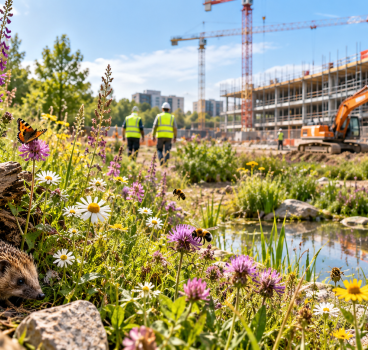
Rewilding construction sites to boost local biodiversity
At a time when the UK is facing a serious decline in wildlife, the construction industry has an opportunity to rethink its relationship with the natural environment. So let’s ask the question - could...
Read more