
Benches are more than just comfortable seating: Their key role in optimising dwell time
In recent years, perceptions of the traditional town centre have changed. Accelerated by the Covid-19 pandemic, high streets have now become a vital hub for leisure, entertainment and community, rather than purely retail-driven shopping environments. Placemaking plans that prioritise seating and encourage social interaction can therefore empower town planners and local authorities to create more inviting and welcoming high streets that people want to spend time on.
The ever-evolving nature of British high streets can be explained by several key changes to society and working culture. Hybrid working patterns, introduced during lockdown and retained by many businesses, have led to modest midweek footfall increases in suburban and market-town high streets as a result of people working closer to home. The substantial rise in e-commerce and online banking has also significantly reduced the number of department stores, banks and clothing retailers, with many replaced by restaurants, cafés, gyms, bars and experiential leisure facilities.
To encourage greater use of the UK’s high streets, many councils and local authorities have introduced pedestrian-friendly zones and active travel routes for walking and cycling.
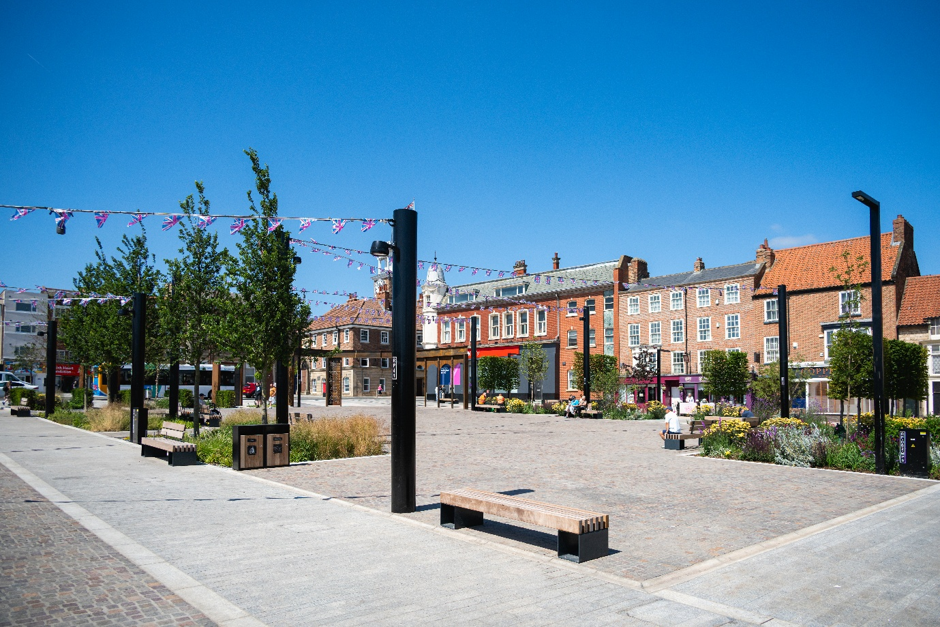
These initiatives are – as Centre for London research suggests – an effective method of increasing dwell time, especially when combined with the introduction of beautifully crafted and well-placed benches. Indeed, providing additional seating and al-fresco dining opportunities is likely to have a strong impact on footfall on these high streets.
Comfortable and accessible seating
With increasing dwell time pivotal in effective town centre regeneration, providing people with somewhere accessible and comfortable to sit must be at the forefront of public landscape design.
Benches that feature backs, such as Hornbeck’s Mettro range, can directly influence how long people linger on pedestrian streets. In fact, a study by Cornell University found people stayed an average of around 14 minutes on seating with backs, compared to under eight minutes on backless benches and less than six minutes on ledges and other secondary seating.
For older people or those with less mobility, a lack of suitable places on which to rest can ultimately decide whether a trip into town even happens. Having benches placed at regular intervals, at the right height and with comfortable armrests makes high streets and town centres much more inviting.
The importance of this approach is reflected by Transport for London’s ‘Healthy Streets’ approach, which includes places to stop and rest as one of its core principles.
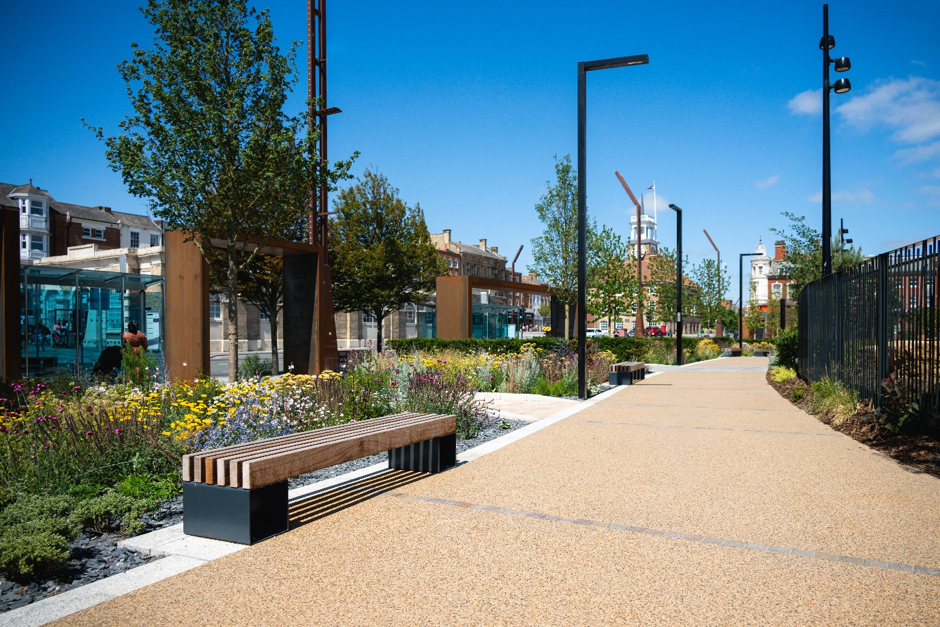
The correct specification of bench materials can also play a far more important role in dwell time than many realise. Timber, for instance, has low thermal conductivity, meaning the benches won’t be uncomfortably cold in winter. Likewise, unlike metal alternatives, they won’t get excessively hot when temperatures rise in summer.
Creating high streets people want to stay on
While the purpose of a UK high street has certainly evolved over the past few years, that shift offers a superb opportunity to increase dwell time and optimise social interaction. Bench design and placement have a key role to play, providing residents and visitors with a comfortable and inviting environment that ultimately encourages longer stays and drives regeneration.
Additional Blogs

Why fire performance is about the system, not the material
There is a persistent assumption by some in construction that a construction product’s individual fire classification will determine how safe a building will be. It does not, and new independent...
Read moreHas the supply chain kept up with luxury kitchen installation?
The UK's premium kitchen market is evolving rapidly, creating demand for a new generation of specialist suppliers who understand that luxury is about far more than simply delivering products, writes...
Read more
How to Take Your Team from Reactive Problem-Solving to Proactive Planning
Many jobsites rely on reacting to issues as they appear, leading to costly fixes and avoidable delays. Shifting to a forward-planned environment, where all trades work from a shared plan, helps teams...
Read more