
Are we designing buildings that nobody will know how to maintain?
Construction has never been better at designing sophisticated buildings. Modern developments are packed with intelligent building management systems, renewable energy technologies, automated lighting, heat recovery, smart ventilation, digital controls and increasingly complex mechanical and electrical services. Collectively, these innovations are transforming how buildings perform, helping to reduce operational carbon, improve occupant comfort and support the industry's journey towards net zero.
All of this is undoubtedly positive, but it also raises a question that receives surprisingly little attention. Are we designing buildings that will become increasingly difficult to maintain, writes John Ridgeway?
It is an uncomfortable thought because the construction industry naturally focuses on getting projects completed. Success is measured by programme, quality, cost and handover. Once the keys have been passed to the client and the defects period has ended, the project is considered complete. In reality, however, the building's life is only just beginning.
The Building Will Be Standing Long After We've Gone
A commercial building completed today could still be operating in 2075. Think about that for a moment.
Most of the architects, engineers, contractors and consultants involved in delivering that project will have retired long before then. Some manufacturers may no longer exist. Software platforms will almost certainly have changed, building management systems will have evolved several times and many of today's "cutting-edge" technologies will appear hopelessly outdated.
The building, however, will still be expected to function. That simple reality changes the way we should think about design.
Perhaps then, our greatest responsibility isn't simply to create buildings that perform brilliantly on the day they are handed over, but buildings that can still be understood, maintained and adapted by people who haven't even entered the industry yet.
One of the more curious aspects of construction is that the people who may know the most about how a building performs over the long term are often involved relatively late in the process.
Facilities managers spend decades dealing with the consequences of design decisions. They know which plant rooms become impossible to access once equipment is installed. They know which manufacturers provide excellent long-term support and which disappear from the market. They understand which systems become expensive to maintain, which components regularly fail and which apparently clever design features quickly become operational headaches.
It seems however, that these lessons are not always fed back into the next generation of projects. Instead, every new building risks repeating many of the same mistakes.
When Complexity Becomes a Liability
There is, of course, nothing wrong with innovation. Modern technology has transformed building performance and there is no question that intelligent systems have an important role to play.
The challenge arises when complexity begins to outweigh maintainability. Every additional control system introduces another interface that must be understood. Every bespoke component creates another future replacement challenge. Every software platform also requires future compatibility and every highly engineered solution depends upon somebody, somewhere, understanding exactly how it works.
These are not technical issues – they are lifecycle issues - because buildings rarely fail all at once. Instead, performance gradually declines as systems become harder to maintain, replacement parts become unavailable, specialist knowledge disappears and maintenance budgets come under pressure.
The Sustainability Question Nobody Is Asking
This also raises an interesting question about sustainability. The industry rightly focuses enormous attention on reducing operational energy and embodied carbon, but how often do we measure the carbon associated with maintaining unnecessary complexity?
Every failed control system requires replacement. Every premature plant upgrade carries embodied carbon and every difficult maintenance task consumes additional labour, transport and materials.
In other words, a building that is difficult to maintain may never achieve the environmental performance it promised on paper.
Perhaps then, true sustainability isn't simply about designing efficient buildings. Perhaps it is about designing buildings that remain efficient for fifty years. There is an important difference.
Construction has always accepted that buildings should be flexible enough to accommodate changing occupiers, changing technologies and changing regulations. If that is the case, we should now extend that thinking to maintenance.
We have to ask ourselves - can future engineers safely reach critical equipment? Will replacement components still be readily available? Can systems be upgraded without major disruption? Would somebody unfamiliar with the original design understand how the building actually works?
These questions may not influence planning approval, but they will influence operational performance for decades.
A Different Measure of Success
Perhaps the industry has been asking the wrong question. Instead of asking, "How intelligent can we make this building?" Perhaps we should also be asking, "How easy will it be to operate, maintain and adapt over the next half century?"
Those are not competing objectives. In fact, they are becoming increasingly inseparable.
As buildings become more sophisticated, their long-term success will depend not simply on how much technology they contain, but on how effectively that technology can be managed throughout its life.
Because the best buildings are not necessarily those with the most advanced systems. They are the buildings that continue to perform reliably, efficiently and sustainably long after the project team has moved on.
Construction has become exceptionally good at designing buildings for practical completion. The next challenge may be designing them for the people who will still be looking after them fifty years from now.
Frequently Asked Questions
1. Why should facilities management be considered during the building design stage?
Facilities management should be considered early because design decisions directly affect how easy a building is to operate, inspect, maintain and repair. Involving FM professionals during design can reduce long-term maintenance costs, improve building performance and extend the lifespan of building systems.
2. What is design for maintainability in construction?
Design for maintainability is the process of creating buildings that are easy to inspect, access, service, repair and upgrade throughout their lifecycle. It focuses on reducing operational complexity while improving long-term building performance.
3. Why are modern buildings becoming more difficult to maintain?
Many modern buildings incorporate sophisticated building management systems, renewable technologies, digital controls and complex mechanical and electrical services. While these systems improve performance, they can also increase maintenance requirements if maintainability is not considered during design.
4. What is whole-life building performance?
Whole-life building performance considers how a building performs over its entire lifespan, including construction, operation, maintenance, refurbishment and eventual replacement or demolition. It recognises that a building's true value extends far beyond practical completion.
5. How can architects design buildings that are easier to maintain?
Architects can improve maintainability by providing safe access to plant and equipment, simplifying building systems, selecting durable materials, reducing unnecessary complexity and involving facilities management professionals during the design process.
6. Why is building maintenance important for sustainability?
Well-maintained buildings operate more efficiently, consume less energy, require fewer replacement materials and have a longer service life. Good maintenance therefore reduces whole-life carbon emissions while improving occupant comfort and building resilience.
7. What are the benefits of involving facilities managers in construction projects?
Facilities managers provide valuable insight into how buildings perform after handover. Their experience can help improve equipment access, maintenance strategies, system reliability, operational efficiency and long-term asset management.
8. What is the difference between building handover and building operation?
Building handover marks the completion of construction, while building operation begins the much longer phase of managing, maintaining and optimising the building throughout its working life. Most buildings will spend decades in operation after construction has finished.
9. Can smart buildings become expensive to maintain?
Yes. Smart buildings offer significant operational benefits, but highly complex systems may require specialist knowledge, software updates, replacement components and ongoing maintenance. Designing for simplicity alongside technology can improve long-term value.
10. How does maintainability affect whole-life costs?
Buildings that are easy to maintain generally experience lower repair costs, reduced downtime, longer equipment life and improved operational efficiency. Considering maintainability during design can significantly reduce the total cost of ownership.
11. What is lifecycle thinking in construction?
Lifecycle thinking considers every stage of a building's existence, from concept and construction through operation, maintenance, refurbishment and eventual end of life. It helps project teams make decisions that deliver better long-term environmental and financial outcomes.
12. What makes a building successful over the long term?
A successful building is not simply one that is delivered on time and within budget. It should also be durable, adaptable, energy efficient, easy to maintain and capable of meeting the needs of its occupants throughout its entire lifecycle.
Additional Blogs
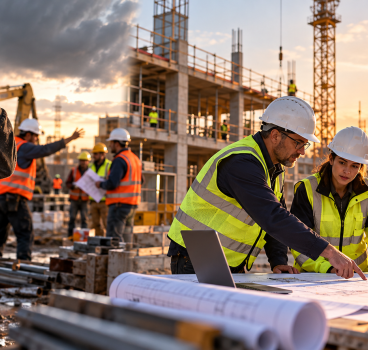
How to Take Your Team from Reactive Problem-Solving to Proactive Planning
Many jobsites rely on reacting to issues as they appear, leading to costly fixes and avoidable delays. Shifting to a forward-planned environment, where all trades work from a shared plan, helps teams...
Read moreDesigning with large trees and how architects can create immediate impact
Architecture is often judged by the relationship between buildings and their surroundings, but even an exceptional building can feel unfinished when it sits within a landscape of young trees, exposed...
Read more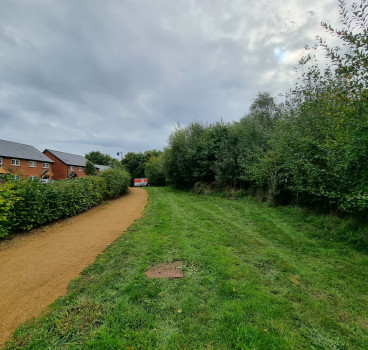
The numbers don’t lie: why industrial fire statistics demand a response
Every year the government publishes its fire statistics, and every year those of us in the fire safety sector read them with a mixture of curiosity and concern. Curiosity, because they represent an...
Read more