
Light rail takes centre stage as industry unites around UK’s £15.6 billion urban transport ambition
The case for light rail as a cornerstone of sustainable urban mobility was powerfully made last week as engineers, planners, academics and regulators gathered for the RailEI Light Rail Seminar. The event, Light Rail: Making City Rail Travel More Sustainable, at the Royal Armouries in Leeds showcased both the scale of ambition within the sector and the depth of innovation already underway across the UK.
From a revolutionary shallow-track system being tested on the streets of Coventry, to a mass transit network set to transform connectivity across West Yorkshire, the day painted a picture of an industry accelerating rapidly, and doing so with sustainability, accessibility and digital innovation at its core.
The backdrop is significant. The government's 10-Year Infrastructure Strategy, published in June 2025, committed £15.6 billion to transport systems including light rail, placing urban connectivity firmly on the national agenda. Speakers at the seminar made clear that the sector is ready to deliver, and that the benefits extend well beyond getting people ‘from A to B’.
John Reed, Senior Responsible Officer for Mass Transit at West Yorkshire Combined Authority, set out the social and economic case for the proposed West Yorkshire Mass Transit network, which would link Leeds, Huddersfield and Bradford under a modern light rail system. With major employers including Nissan within the catchment area and early works anticipated from 2027, the scheme represents one of the most significant regional transport investments in a generation.
Dr Christopher Micallef, Track Systems Programme Lead for Coventry Very Light Rail (CLVR), presented what many in the room regarded as one of the day's most striking innovations. It’s a shallow slab track system requiring just 30 centimetres of surface removal, bypassing the costly underground infrastructure works that have long made urban tram schemes prohibitively expensive. With £50 million invested over eight years, the project is being watched closely as a potential blueprint for light rail deployment in cities across the UK.
Richard Hines, HM Chief Inspector of Railways at the Office of Rail and Road (ORR), spoke on safety compliance in tram and light rail operations, calling on the industry to embrace digital fatigue monitoring technology. This includes facial recognition systems already in use on some tram networks, and referencing the Croydon derailment as a defining moment for safety culture in the sector.
Further sessions covered electrification challenges, tramway vehicle and infrastructure interfaces, and the engineering detail behind accessible station design with Professor João Pombo of the University of Huddersfield delivering a technically rich address on how the interaction between copper and carbon components affects the longevity of electrified rail systems.
The collective message from the day was clear: light rail, long overshadowed in public debate by major rail projects, is quietly becoming one of the most dynamic and consequential areas of UK infrastructure.
Among those taking note was Josie Worrall, Head of QHSE at DYWIDAG, who attended the seminar and left with both a renewed perspective on sustainability in transport and a clear sense of where DYWIDAG’s expertise intersects with the sector’s pressing needs.
"I think I was expecting more focus on sustainability in rail products and systems," she said. "I was actually really surprised at the wholesome way the whole sustainability part was looked at, from accessibility and social value through to the engineering and the supply chain. I learned a lot."
For DYWIDAG, the day opened up tangible opportunities. Dr Micallef's presentation revealed that the Coventry VLR project has been seeking a structural health monitoring partner. It is a capability that DYWIDAG delivers on major infrastructure projects, from its base just eight miles from the Coventry scheme.
The seminar also prompted internal thinking around digital monitoring product development, with Josie identifying potential crossover between DYWIDAG's existing infrastructure monitoring platform and the kind of advanced digital safety systems being called for across the light rail sector.
Josie Worrall continued: "It was a fantastically inspiring day. Events such as the RailEI Light Rail Seminar not only showcase transformational innovation and projects, they give attendees a better understanding of their role in facilitating the industry’s sustainable ambitions.”
Additional news

School fires at the start of term reveal the real cost of disruption
Pupils and teachers have returned to school this September, but a cluster of fire incidents over the summer has left some of them facing an uncertain and disrupted start to the new academic year....
Read more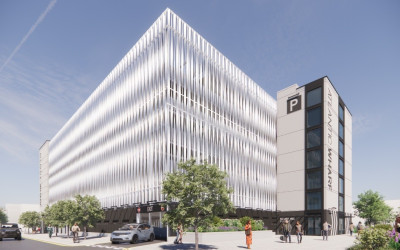
Major 900-space car park approved for Cardiff Bay regeneration scheme
Cardiff Council has appointed GOLDBECK Construction to deliver a major new multi-storey car park as part of the ongoing regeneration of Atlantic Wharf in Cardiff Bay.
Read more