
Why good contractors are walking away from bad projects
There is a growing change happening across the construction industry, one that many clients still have not fully recognised. Highly competent, reputable contractors are increasingly walking away from projects that once would have been considered “good work.” They’re turning down tenders, withdrawing at pre-construction stage and in some cases, refusing to negotiate further when the warning signs become too obvious, writes John Ridgeway.
What might look like reluctance or oversensitivity from the outside is, in reality, a rational response to an industry where risk is rising faster than reward. Good contractors are not becoming harder to please - they are simply becoming more selective because the consequences of accepting a bad project now outweigh the benefits of winning it.
This movement is not just an anecdotal trend - it’s becoming a structural change in how contractors operate and understanding the reasons behind it, is essential for anyone responsible for procuring and delivering construction work today.
The first and perhaps most pressing factor behind this behavioural shift is risk. Contractors are no longer dealing with the risk profiles of ten or even five years ago. Inflationary pressure, volatile material pricing, labour shortages and tightening regulation have turned relatively predictable project environments into unstable ones.
Fixed-price contracts once provided certainty for clients, but they now represent significant exposure for contractors. If steel prices dramatically increase or a specialist subcontractor becomes unavailable, the contractor can end up trapped in a contract that actively undermines their own financial health.
Even when variations are justified, recovering costs has become more difficult. Disputes are more common, payment cycles have lengthened and claims processes have become far more adversarial. Simply put, the margin for error has evaporated, while the penalties for miscalculation have grown.
Good contractors understand this. They know that a project with unclear scope, unrealistic timelines or ambiguous risk allocation is no longer just a challenge - it’s a potential threat to survival.
Unrealistic programmes are driving talent away
Pressure on delivery programmes has also intensified dramatically. Clients want more built in less time, often without appreciating the interdependencies or physical constraints involved.
Ambitious visions are not inherently problematic, but what makes a project “bad” is when ambition is not supported by planning. Good contractors are increasingly rejecting jobs where the schedule has been written backwards from an immovable deadline rather than developed through proper sequencing, logistics assessment and design readiness.
Compressed programmes create more than just stress, they create unsafe conditions, unmanageable overtime and high staff turnover. Skilled professionals do not want to work on projects where burnout is guaranteed and success is defined by sheer endurance rather than good management.
When a contractor consistently chooses the wrong programmes, they lose people. When they choose the right ones, they keep them. This is why strong contractors walk away, to ensure they are protecting their teams as much as their profit margins.
It has also become common for contractors to receive incomplete, contradictory or rapidly evolving design information. Design responsibility is often fragmented, leaving contractors with the task of coordinating multiple consultants while absorbing the risk of discrepancies.
What used to be a manageable inconvenience is now an existential problem. With labour stretched and supply chains under strain, every unexpected design change has a cascading impact across procurement, sequencing and cost.
Good contractors can instantly identify projects where design maturity is too low for a fair price to be agreed. They walk away not because the project is undesirable, but because the design state prevents any realistic pricing or programming accuracy.
Clients who believe contractors are “disinterested” in their projects often do not realise that the thing chasing contractors away is uncertainty created long before the builder is invited to the table.
Contract terms are becoming increasingly one-sided
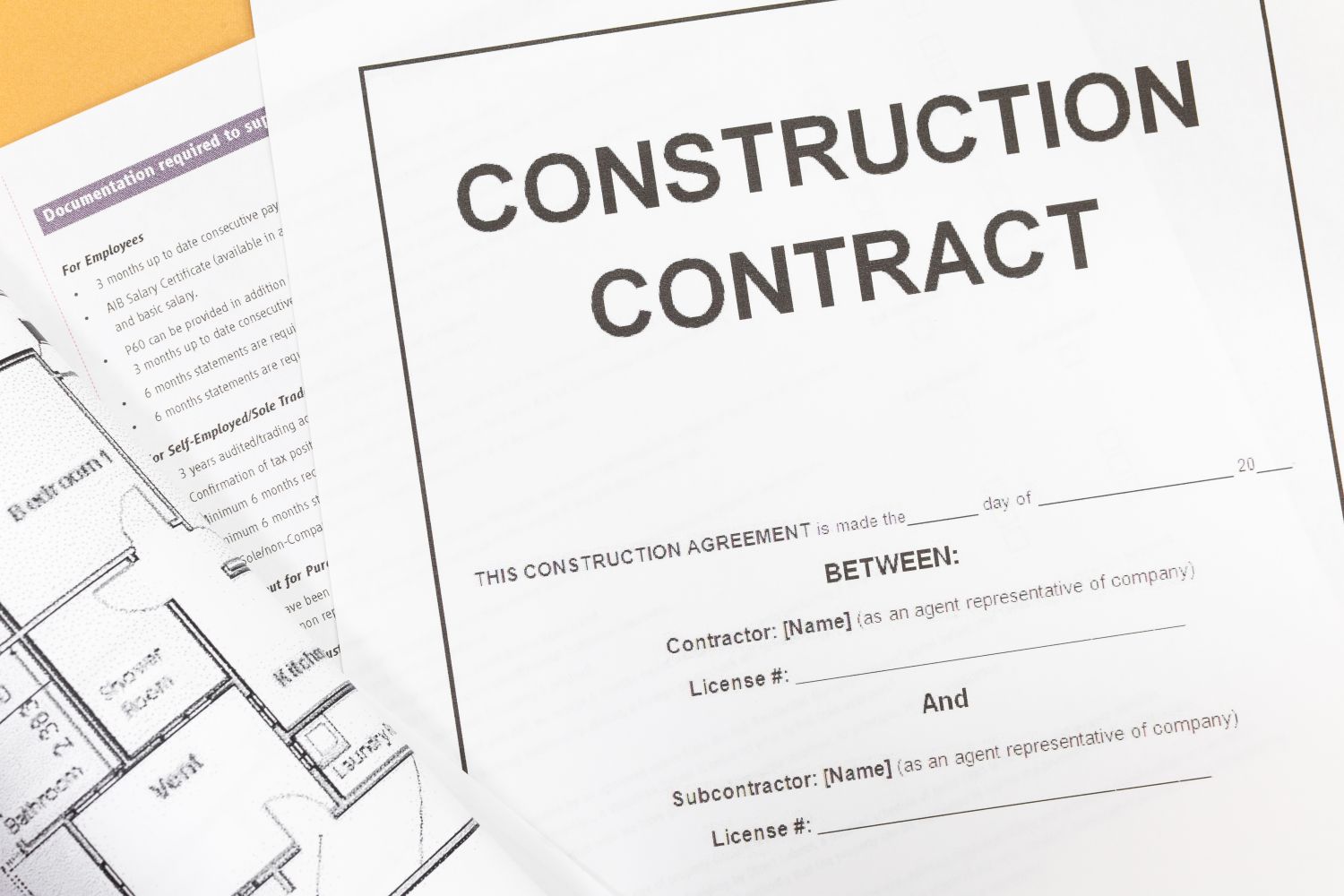
Another major factor is contract structure. Many contractors are now refusing to enter agreements where risk is disproportionately transferred onto the delivery team.
Clauses related to liquidated damages, variation processes, indemnity, design responsibility and payment terms are all being scrutinised more closely. Contractors with strong reputations and stable order books no longer feel pressured to accept clauses that undermine their viability.
When contract negotiations begin with the assumption that the contractor is the party who must absorb every unknown, good contractors choose the simplest option and step away. Bad terms create bad projects and good contractors avoid them.
This is especially true for contractors who depend on specialist subcontractors and those subcontractors are also becoming more selective. Many will no longer commit to projects with unstable cashflow histories, overly complex payment systems or retentions that threaten their liquidity.
If a project environment is known to be administratively heavy or slow-moving, the best subcontractors simply decline to participate. When specialists walk away, main contractors follow.
A project without a viable supply chain is, by definition, a bad project. Good contractors are learning to read these signs earlier and avoid becoming entangled in something they cannot deliver safely or profitably.
The reputation factor
Ironically, it is the best contractors, the ones with strong values, high standards and loyal teams, who walk away first. That’s because reputation matters to them.
A project that is underpriced, rushed or built on unclear information is likely to result in conflict, claims and disappointment. Good contractors recognise that even if they manage to deliver a challenging project, the reputation cost might not be worth the effort. It is far better to be remembered for declining a dysfunctional project than for completing a problematic one.
If good contractors are turning down work, the natural question then becomes - what needs to change? The most capable contractors are not looking for easy projects, they are looking for well-structured ones. Projects where:
- Design is sufficiently mature.
- Risk is shared sensibly.
- Programmes are realistic.
- Contracts are fair.
- Payment terms reflect the realities of delivery.
- Communication is open and professional.
Clients who can offer this environment secure the best talent. Those who cannot are left with thinner, more fragile contractor pools.
Ultimately, the rise in contractors walking away is not a sign of weakness or market decline. It is a sign of maturity. It reflects a growing understanding that long-term business health depends on selectivity, discipline and clear-eyed assessment of risk.
Good contractors are not disappearing. They are simply choosing better. And in an industry that desperately needs improved project outcomes, that shift may be one of the most positive developments in years.
Additional Blogs

Why Paint Booth Efficiency Has Become a Manufacturing Bottleneck in 2026
Your production line always seems to run smoothly until painted parts start piling up at the booth. While you've optimized fabrication and assembly, outdated access equipment and rising quality...
Read more5 Construction Project Management Myths That Cost Crews Productive Time
Construction project management myths are pervasive, and the real cost is lost crew hours, not just lost money. Watch out for common misconceptions that can undermine your workforce's productivity...
Read more

The Robotics as a Service Revolution Is Reshaping Warehouse Infrastructure Requirements
Warehouse operators now rent automation equipment instead of purchasing it outright. These robotics as a service models provide access to advanced machines without major capital investments. As...
Read more