
Is timber construction really greener - or just trendy?
Over the past decade, timber has enjoyed something close to a renaissance. Architects talk about warmth and biophilic design. Developers highlight carbon storage. Contractors discuss speed of assembly and off-site precision. Cross-laminated timber (CLT) schemes feature in glossy brochures and sustainability reports. Timber, we are told, is the future. But beneath the enthusiasm sits a question worth asking quietly and honestly - is timber construction genuinely greener - or has it become fashionable shorthand for sustainability, writes John Ridgeway?
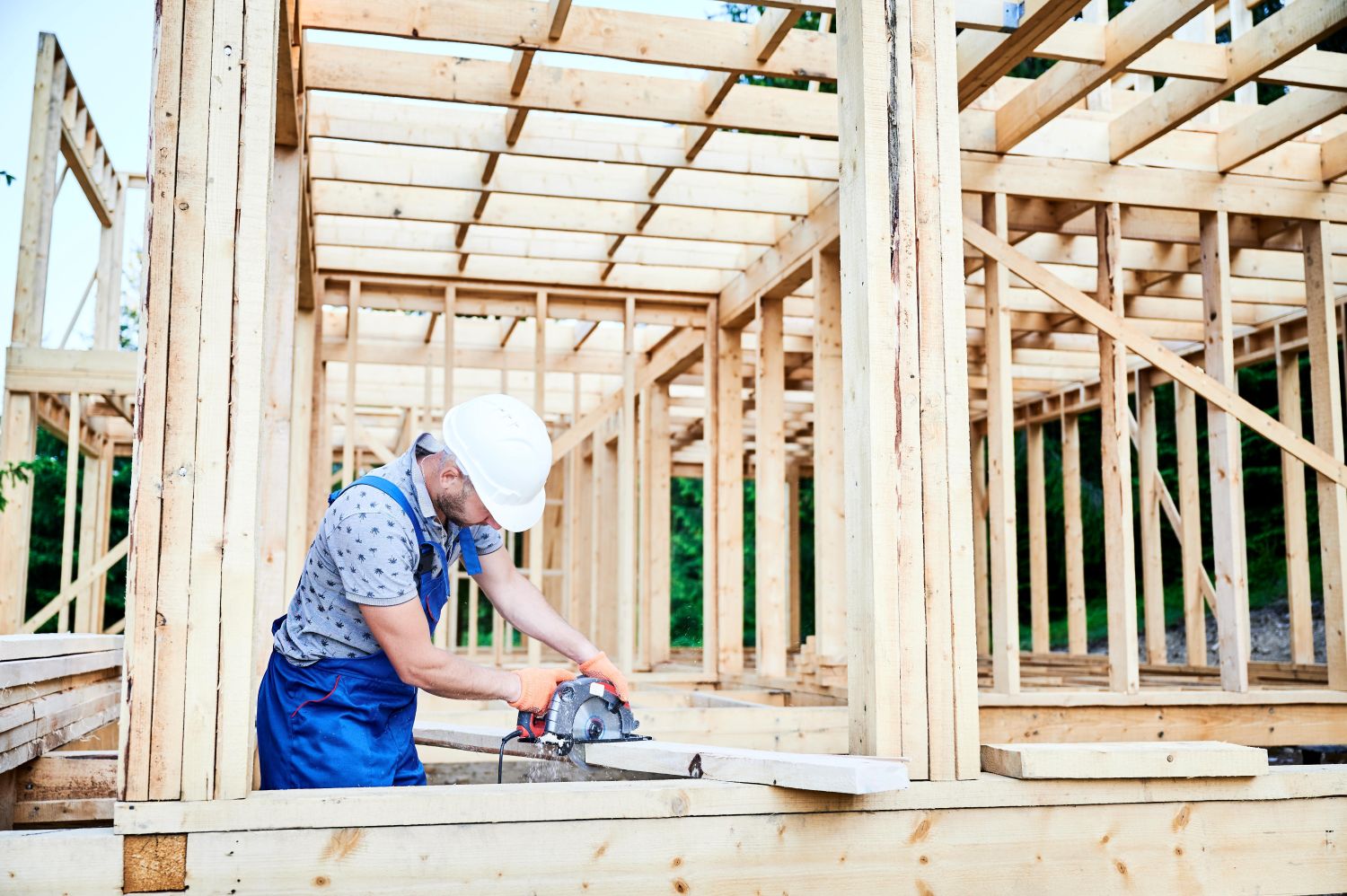
The answer, as with most things in construction, is more complicated than the headline suggests. There is no doubt that timber carries environmental advantages. As a material, it is renewable. Trees absorb carbon dioxide as they grow, storing it within the fibre. When that timber is harvested and used structurally, a portion of that carbon remains locked into the building fabric - sometimes for decades.
In contrast, materials such as steel and concrete are energy intensive to produce. Cement manufacturing alone is responsible for a significant share of global carbon emissions. On a purely embodied carbon comparison at material level, timber often performs favourably. That is the foundation of the argument, but buildings are not material samples - they are systems - and the environmental performance of a system depends on far more than one component.
Take sourcing, for example. Timber’s green credentials rely heavily on responsible forestry. Sustainably managed forests can indeed replenish harvested trees, maintain biodiversity and support carbon cycles. Poorly managed logging, however, can drive deforestation, habitat loss and soil degradation. The distinction is critical, but not always visible in a marketing statement.
Responsible sourcing
Certification schemes exist to ensure responsible sourcing, and many reputable suppliers comply, but global supply chains are complex. Demand for structural timber has increased sharply in some markets. When demand rises faster than oversight capacity, risk follows.
Then there is transport. Timber panels may be manufactured hundreds or even thousands of miles from site. Shipping and haulage emissions can offset some of the embodied carbon benefit, particularly if local alternatives exist. None of this invalidates timber as a sustainable option. It simply reminds us that context matters.
Another factor rarely discussed outside technical circles is durability and lifespan. A building that requires major refurbishment or replacement earlier than anticipated carries an environmental penalty. Longevity is sustainability. Modern engineered timber systems are designed to meet robust performance standards. Fire resistance strategies have evolved significantly, and structural performance is well understood when designed correctly. But public perception still wrestles with the question of resilience, particularly in the wake of heightened scrutiny around fire safety in recent years.
Design teams now devote considerable effort to detailing, encapsulation, moisture control and fire protection. Those additional measures may involve other materials, such as plasterboard, membranes, insulation, all of which themselves have environmental footprints. Again, this is not criticism. It is reality. Construction is layered.
Operational carbon must also be considered. The energy efficiency of a building depends on insulation, airtightness, services design and occupant behaviour. A poorly designed timber building can perform worse operationally than a well-designed masonry one. Material choice alone does not guarantee performance.
There is also a social dimension to the timber conversation. Timber buildings feel different. The exposed structure, where permitted, creates warmth and texture. Many occupants report positive psychological responses to natural materials. Biophilic design is not a marketing invention - there is evidence that connection to natural elements can improve wellbeing. That benefit is harder to quantify than carbon metrics, but it has value.
Speed of construction
Speed of construction is another practical advantage often cited. Engineered timber systems can be prefabricated with precision and assembled rapidly on site, reducing programme time and, in some cases, site waste. Fewer vehicle movements and shorter build durations can reduce local disruption. For urban infill sites or constrained programmes, this efficiency can be compelling. So where does the scepticism come from?
Partly, it stems from the cyclical nature of construction trends. The industry has a habit of embracing “silver bullet” solutions. At various times, modular construction, façade innovation or digital modelling have been presented as transformative answers to systemic challenges. Timber risks being framed the same way - as if switching material automatically resolves the climate question. It does not.
Sustainability is a whole-life issue. It includes embodied carbon, operational efficiency, maintenance cycles, adaptability, end-of-life strategy and supply chain ethics. Timber can contribute positively within that framework, but it cannot carry it alone.
Another nuance is scale. Timber performs exceptionally well in certain building typologies, such as mid-rise residential, education, smaller commercial schemes. As height and span increase, hybrid approaches often emerge, blending timber with steel or concrete. Hybrid structures may reduce embodied carbon compared to conventional solutions, but they complicate the narrative of “all-timber equals green.”
Regulation also influences adoption. In some jurisdictions, building height restrictions for combustible materials limit where timber can be used structurally. This regulatory landscape continues to evolve and it shapes perception as much as technical performance.
Then there is the economic factor. Timber prices fluctuate with global demand, forestry cycles and geopolitical conditions. When supply tightens, costs rise. Sustainability must also be commercially viable to achieve widespread adoption. If a material becomes significantly more expensive, its use may narrow to prestige or flagship projects, which reinforces the perception of trend rather than transition. So, is timber greener?
Whole life carbon
In many scenarios, yes, particularly when responsibly sourced, thoughtfully designed and assessed through whole-life carbon modelling. Independent life cycle assessments frequently show embodied carbon reductions compared to traditional alternatives, especially in mid-rise buildings. But is it automatically greener in every application, regardless of context, supply chain or design quality? No. The more useful question might be - greener compared to what and under what conditions?
A carefully designed concrete building incorporating low-carbon cement replacements, efficient structural grids and high operational performance may outperform a poorly detailed timber scheme over its lifespan. Conversely, a well-executed mass timber project using certified local timber, optimised structural design and high-performance building envelope can significantly reduce embodied carbon. The industry’s challenge is to move beyond binary debates.
Timber should not be dismissed as a fashion statement. Nor should it be adopted uncritically as a moral choice. It is a material with strengths and limitations - like any other. If the conversation remains evidence-based rather than emotive, timber can play a meaningful role in reducing construction’s environmental impact. But it must also sit within a broader commitment to material efficiency, design intelligence and lifecycle accountability.
Sustainability is rarely delivered by trend. It is delivered by rigorous analysis, transparent data and consistent decision-making. Timber may well be part of the future. However, whether it becomes a lasting structural shift or a chapter in the industry’s evolving story will depend less on its aesthetic appeal and more on how honestly, we assess its performance.
The greenest material is not the one that photographs well in a brochure. It is the one that performs responsibly - from forest to foundation to eventual reuse or recycling. That is a higher standard than trend and it is the standard the industry should be aiming for.
Additional Blogs

The Robotics as a Service Revolution Is Reshaping Warehouse Infrastructure Requirements
Warehouse operators now rent automation equipment instead of purchasing it outright. These robotics as a service models provide access to advanced machines without major capital investments. As...
Read moreIs construction becoming brilliant at measuring everything except common sense
Construction has never had access to more information. We can track the progress of a project almost in real time. We can monitor costs, labour, productivity, programme performance, carbon, waste,...
Read more
Rewilding construction sites to boost local biodiversity
At a time when the UK is facing a serious decline in wildlife, the construction industry has an opportunity to rethink its relationship with the natural environment. So let’s ask the question - could...
Read more