
This feels like an advert for Zabble and I make no apology for that
Electricians, plumbers, roofers, joiners, landscapers, decorators and independent contractors together with dozens of other different trades, often deliver exceptional work, but many still struggle with one of the biggest commercial barriers in the modern built environment - being found, being trusted and converting enquiries into work. The challenge is not capability, it is visibility, writes John Ridgeway.
Small trades do not usually fail because of poor workmanship, they often struggle because they are difficult to find. Which is why – and I cannot believe that I am saying this because we do not do adverts on Talk.Build - that I was delighted to find Zabble, a website-building platform designed specifically for small trades, that is helping businesses create professional online visibility without needing agencies, developers, or technical expertise.
However, when I first looked at Zabble properly, what stood out was the cost. For just £95, a small trader can get a professional website complete with a domain name, strong design, fully written content and optimisation built in. My first reaction was – why would I want to pay that, when I could just go onto GoDaddy, Wix, or another platform and build something myself for a fraction of the cost?
Then I thought again - technically, yes, I could do that. The tools are there and if I was willing to invest the time, wrestle with templates, write the copy, structure the pages, think about SEO and make it all actually look credible, I could probably do most of it myself.
But then I thought about it differently. I could probably tackle a lot of DIY jobs myself too, such as basic plumbing, decorating, maybe even some joinery if I really had to. But why would I, if what I really want to do is focus on my own business and let a specialist handle the work properly? That is where Zabble started to make real sense. For a small trade business, £95 a month is not simply paying for a website, it is paying for professional credibility, saved time, less hassle and the ability to stay focused on winning and delivering work. Suddenly, it looked like remarkably good value for money.
The digital gap many small trades still face
A huge number of small construction and trade businesses still rely heavily on word-of-mouth, repeat clients, social media pages, or listing sites to generate enquiries. While referrals remain powerful, they are no longer enough on their own.
Today, whether a homeowner needs a plumber, a facilities manager is looking for an electrical contractor, or a developer needs a landscaping specialist, the search often starts online.
Yet many smaller businesses still operate with little real digital presence. Some have no professional website at all, while others rely on outdated platforms that are difficult to navigate, poorly optimised for mobile, or almost invisible in search. In many cases, messaging is unclear, enquiry routes are weak and online credibility is limited. In practical terms, strong businesses can still lose work simply because they are difficult to find or do not appear as established as they really are.
Why platforms like Zabble matter
This, I have decided, is where platforms like Zabble could become increasingly valuable. If small trades can quickly build professional, credible websites without the traditional cost, complexity, or time investment of hiring an agency or developer, the barrier to digital visibility becomes much lower.
That changes the commercial conversation. A website is no longer just an online brochure, it is a lead-generation tool, a credibility signal and often a competitive advantage. For small trades, a stronger digital presence helps customers quickly understand who they are, what they do, where they operate and why they should be trusted. In many cases, that can directly influence whether an enquiry becomes a job.
In construction and trades, trust is often the deciding factor. Customers are not simply buying a service - they are buying confidence in who they are hiring. A professional website can quickly show whether a business looks credible, specialises in the right work, has relevant experience and is easy to contact. For independent trades and SMEs, that trust can often be the difference between winning work and losing it to a competitor that simply appears more established online.
This is where platforms like Zabble could have the biggest impact. Larger contractors and established firms often have dedicated websites, stronger branding, SEO visibility and digital marketing support. Smaller businesses usually do not.
One of the biggest hidden pressures for small trades is time. The same person often handles quoting, site work, scheduling, customer updates, admin and business development. If digital platforms simplify the process of creating and managing a professional online presence, they reduce one more barrier.
Instead of spending time trying to build websites manually, manage fragmented online profiles, or relying entirely on referrals, small businesses can focus more on what they do best’ winning work and delivering it well.
Why digital presence is becoming non-negotiable
We all know that the built environment is changing. Customers expect faster responses, stronger credibility, and clear digital visibility. Search behaviour has changed. Buying behaviour has changed. For many trades, not having a strong online presence increasingly creates risk. The businesses that are easiest to find, easiest to trust and easiest to contact often win first attention and first attention often becomes first opportunity.
For small trades, platforms like Zabble represent something bigger than website creation. They reflect a change in how independent businesses can promote themselves, strengthen trust, improve visibility and compete more effectively without major overhead.
At this stage, I have to admit that I have effectively just written an advert for Zabble. That is not something we normally do on Talk.Build. We are here to challenge, question and talk honestly about what matters across the built environment, but every so often, something stands out because it solves a genuine problem.
Small businesses are the backbone of this industry. They build, install, repair, maintain, and deliver the work that keeps the built environment moving. Yet many are still brilliant at what they do and almost invisible online.
So yes, this is an advert of sorts and I make no apology for that. If a platform helps smaller companies look more professional, become easier to find and spend less time chasing work so they can focus on delivering it, then that feels like something worth talking about.
Additional Blogs

The Robotics as a Service Revolution Is Reshaping Warehouse Infrastructure Requirements
Warehouse operators now rent automation equipment instead of purchasing it outright. These robotics as a service models provide access to advanced machines without major capital investments. As...
Read moreIs construction becoming brilliant at measuring everything except common sense
Construction has never had access to more information. We can track the progress of a project almost in real time. We can monitor costs, labour, productivity, programme performance, carbon, waste,...
Read more
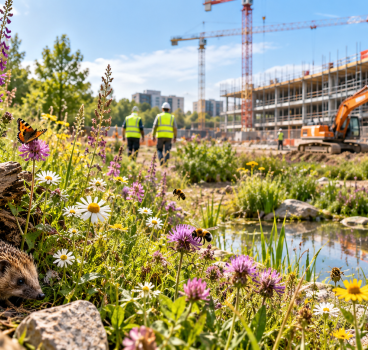
Rewilding construction sites to boost local biodiversity
At a time when the UK is facing a serious decline in wildlife, the construction industry has an opportunity to rethink its relationship with the natural environment. So let’s ask the question - could...
Read more