
The changing face of workplace AV and what FM managers need to know
In today’s hybrid workplaces, facilities managers can no longer treat audio-visual systems as background infrastructure - they are now mission-critical assets that directly influence productivity, collaboration and user satisfaction. The days of a simple projector and speaker setup are long gone - modern AV technology underpins everything from global video conferencing to integrated room booking and environmental control. As organisations demand seamless, high-quality digital experiences, facilities professionals must understand how these complex systems function, interact with IT networks and building services and ultimately impact operational performance.
Pensdown – the electrical people work closely with facilities managers, who are now responsible for ensuring that spaces are equipped for seamless communication. Every meeting room, breakout space and collaboration zone must function effectively for both in-person and remote participants. The integration of AV technology into the wider building fabric also means that it now interacts with networks, lighting controls, power supplies and even HVAC systems. Understanding how these elements work together has become a key skill for facilities professionals who need to deliver improved communication, operational efficiency and an enhanced user experience.
Effective communication depends on clarity, reliability and ease of use. When audio or video quality fails, meetings become frustrating and time is wasted. A properly engineered system removes barriers and allows people to collaborate naturally, wherever they are located.
Operational efficiency is also a direct result of thoughtful design. Modern AV systems can integrate with building management and scheduling software, automating functions such as power management and lighting control. For example, when a room is unoccupied, screens and lighting can automatically switch to standby, cutting energy use and extending equipment life.
Perhaps most importantly, a high-quality AV experience enhances the perception of the workplace itself. Whether used for internal meetings, client presentations or public events, a reliable system conveys professionalism and competence. For facilities managers, this translates into a tangible contribution to employee satisfaction and organisational reputation.
Understanding the challenges
While the benefits are clear, poor planning or installation can quickly undermine an AV project. Many facilities managers find themselves dealing with fragmented systems, where audio, video and control elements have been installed by different contractors using incompatible technologies. This often leads to technical failures and maintenance difficulties.
Network capacity can be another concern. Because most AV systems now operate over IP networks, insufficient bandwidth or a lack of proper security configuration can lead to performance problems and data vulnerabilities. Similarly, poor room acoustics can render even high-end equipment ineffective. Hard surfaces, high ceilings and mechanical noise can all distort sound and reduce intelligibility if not addressed early in the design process.
Complexity is also a recurring issue. Systems that require multiple remotes or unfamiliar software discourage use and increase support calls. The best AV environments are intuitive, allowing users to start meetings or adjust settings with a single touch. Facilities managers should advocate for simplicity in both design and control interfaces.
The foundation of any successful AV system is thorough and early-stage planning. Before equipment is chosen or budgets finalised, facilities managers need a clear understanding of how spaces will be used and what outcomes are required. A training room has very different needs from a boardroom or a hybrid meeting suite. Anticipating the number of users, the type of content to be displayed and the expected interaction level helps define the technical specifications.
This means that integration should be considered from the outset. AV systems rarely operate in isolation - they share power supplies, containment routes and network resources with other building services. Collaboration between the facilities team, IT specialists and electrical contractors ensures that the infrastructure can accommodate both current and future requirements. This proactive approach prevents costly rework and avoids operational downtime once the building is in use.
Technical considerations for FM professionals
Facilities managers do not need to be AV engineers, but understanding key technical principles allows for better oversight and smarter decision-making. Cabling quality, for instance, has a major impact on performance. High-speed Category 6A or fibre-optic cabling provides the bandwidth needed for modern video conferencing. Similarly, Power over Ethernet (PoE) technology can simplify installations by delivering both data and power through a single connection, but power loads must be carefully calculated.
Audio quality remains one of the most common points of failure in meeting rooms. Correct microphone placement and speaker configuration are essential to achieving natural sound. Directional microphones, ceiling arrays and acoustic modelling can all improve clarity and reduce echo. On the visual side, high-resolution displays or laser projectors provide consistent brightness and minimal maintenance, while LED video walls offer flexibility for larger or more public spaces.
Control systems have also become central to the user experience. Centralised touch panels or tablet interfaces allow a single point of control for lighting, blinds, sound and video. Integration with occupancy sensors or digital calendars can automate room setup and shutdown, streamlining operation. Security is equally important - as AV devices are now networked, they must be managed with the same diligence as IT equipment, including regular firmware updates and encrypted communication.
Sustainability has become a defining consideration in facilities management and AV systems can play an important role in achieving environmental goals. Energy-efficient displays, low-power amplifiers and automatic standby modes can significantly reduce consumption. Integrating AV with the building management system also allows for intelligent scheduling so that equipment powers up only when required.
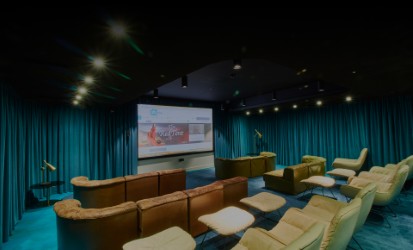
Cloud-based conferencing platforms further contribute to sustainability by reducing the need for travel and by shifting processing demands away from on-site hardware. Modular AV systems extend equipment life, as individual components can be replaced or upgraded without full system replacement. Facilities managers should also plan for responsible recycling and disposal of outdated equipment to minimise environmental impact.
Training, usability and support
However, even the most advanced AV system fails if users cannot operate it with confidence. Training is therefore a critical part of any installation. Facilities teams should ensure that end-users receive clear, practical instruction supported by simple visual guides and on-screen prompts. This investment in training reduces frustration, minimises downtime and encourages greater adoption of the technology.
Like most things, AV systems also require ongoing maintenance to remain effective. A proactive approach - supported by cloud-based monitoring tools - can identify faults before they disrupt operations. Remote diagnostics, automatic software updates and routine servicing should form part of a structured maintenance plan overseen by facilities management.
Future-proofing is another vital consideration. Choosing products and platforms that use open standards rather than proprietary protocols ensures that the system can evolve with emerging technologies. With advancements such as AI-driven audio calibration, immersive displays and virtual collaboration spaces on the horizon, flexibility in system design will protect the organisation’s investment for years to come.
So, we can see that audio-visual systems have moved beyond presentation tools to become central to workplace strategy. They shape how people communicate, collaborate and perceive their environment. For facilities managers, this represents both a challenge and an opportunity. By approaching AV as part of the wider building ecosystem, aligned with IT, energy management and space utilisation, FMs can create workplaces that are efficient, adaptable and engaging.
Additional Blogs
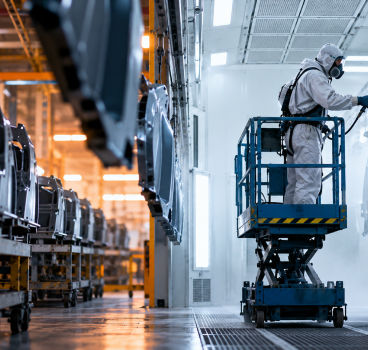
Why Paint Booth Efficiency Has Become a Manufacturing Bottleneck in 2026
Your production line always seems to run smoothly until painted parts start piling up at the booth. While you've optimized fabrication and assembly, outdated access equipment and rising quality...
Read more5 Construction Project Management Myths That Cost Crews Productive Time
Construction project management myths are pervasive, and the real cost is lost crew hours, not just lost money. Watch out for common misconceptions that can undermine your workforce's productivity...
Read more

The Robotics as a Service Revolution Is Reshaping Warehouse Infrastructure Requirements
Warehouse operators now rent automation equipment instead of purchasing it outright. These robotics as a service models provide access to advanced machines without major capital investments. As...
Read more