
Is Ferrocement - the forgotten construction technique ready for a comeback?
In an industry that is constantly chasing the next innovation, it is easy to overlook solutions that have been quietly sitting in the background for decades. Ferrocement is one of those solutions. Once widely used across construction and engineering, it has largely disappeared from mainstream practice. Yet, in today’s climate of cost pressure, carbon reduction and material efficiency, it is beginning to feel unexpectedly relevant again writes John Ridgeway.
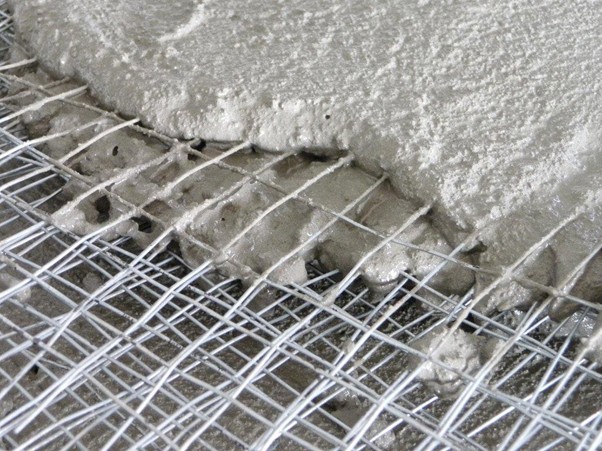
Ferrocement is a simple concept. It combines layers of steel mesh with a cement-based mortar to create a thin, strong composite material. Unlike traditional reinforced concrete, which relies on thicker sections and heavier steel reinforcement, ferrocement distributes strength across multiple layers of fine mesh.
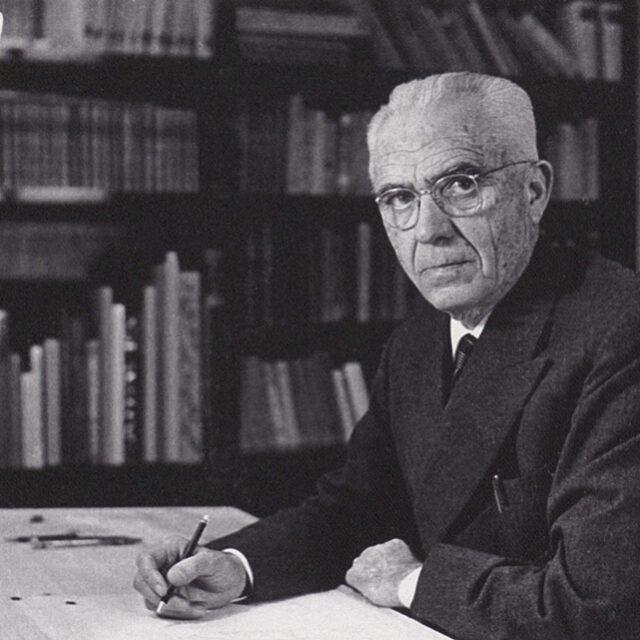
The result is a material that is both lightweight and structurally capable, able to form thin sections without sacrificing durability. The technique was brought into wider use through pioneers such as Pier Luigi Nervi, (pictured) one of the most influential structural engineers and architects of the 20th century, renowned for transforming reinforced concrete into something both highly efficient and visually striking. He demonstrated how it could be used to create elegant, efficient structures that pushed the boundaries of form and engineering.
Why did it fall out of favour?
Despite its strengths, ferrocement gradually fell away from mainstream construction. The reasons are less about performance and more about how the industry itself evolved.
Construction moved towards systems that prioritised speed, repeatability and scale. Precast elements, structural steel and modular approaches offered predictable outcomes with less reliance on skilled, hands-on labour. Ferrocement, by contrast, requires care, precision and a level of craftsmanship that does not always align with programme-driven delivery.
At the same time, design standards and regulations became more closely aligned with conventional materials. As familiarity decreased, so too did confidence in specifying ferrocement. Over time, it became less visible, and eventually, largely forgotten.
However, the conditions that pushed ferrocement aside are not the same as the industry faces today. The priorities have shifted. The UK Green Building Council, for example, highlights that the built environment is responsible for around a quarter of the UK’s greenhouse gas emissions. This has placed material efficiency and embodied carbon firmly at the centre of construction decision-making.
At the same time, organisations such as the World Bank continue to stress the importance of cost-effective, resource-efficient construction methods, particularly as demand for housing and infrastructure grows. Within this context, ferrocement begins to make sense again. It aligns with many of the challenges the industry is now trying to solve.
One of the most compelling aspects of ferrocement is its material efficiency. Because it uses thin sections and distributed reinforcement, it requires significantly less concrete than traditional systems. This has a direct impact on embodied carbon, particularly when considering that the International Energy Agency estimates cement production accounts for around 7–8% of global CO₂ emissions.
As well as sustainability, ferrocement also performs well structurally. Its layered reinforcement helps control cracking and improves durability over time. Rather than relying on isolated steel bars, the mesh spreads load more evenly, reducing the likelihood of large, visible failures.
Its flexibility is another key strength. Ferrocement can be shaped into curves, shells and complex forms without the need for heavy structural systems. This opens up design possibilities that are often difficult or expensive to achieve with conventional materials.
Cost is also part of the conversation. In the right conditions, ferrocement can offer a more economical solution, particularly where material savings outweigh labour input. Studies published in journals such as Construction and Building Materials have shown that, in certain applications, ferrocement can deliver comparable performance with lower overall material costs.
Where could ferrocement be used today?
Ferrocement is not a universal solution and it does not need to be. Its value lies in where it fits best. In low-rise housing, it offers a way to reduce material use while maintaining structural integrity. In refurbishment and retrofit projects, its lightweight nature makes it suitable for overlays and structural enhancements without overloading existing buildings. It is also well suited to roofing applications, particularly thin shell structures that reduce the need for heavy supporting elements.
In infrastructure, ferrocement has long been used for water tanks, channels and smaller structural components, and these applications remain highly relevant. Increasingly, it also has a role to play in projects where sustainability is a key driver, particularly where reducing embodied carbon is a priority.
One of the biggest barriers to ferrocement’s wider use is not technical, but practical. The method relies on skilled labour and careful execution. It is not a “plug and play” system. However, this challenge may also be an opportunity. As the construction industry looks to rebalance towards quality, sustainability and long-term performance, there is a growing recognition of the value of skilled workmanship. Ferrocement sits comfortably within that conversation.
Reintroducing it would not just be about adopting a material, but about re-engaging with a way of building that prioritises understanding over repetition.
Construction tends to associate progress with newness. New materials, new technologies, new systems, but progress is not always about invention. Sometimes it is about re-evaluation.
Ferrocement is not experimental. It is proven. It has delivered durable, efficient structures across decades and across continents. What has changed is not the material, but the context in which we view it.
Today’s industry is looking for ways to build more with less, to reduce waste, to cut carbon and to improve long-term value. These are challenges that ferrocement was already addressing long before they became headline issues.
That said, ferrocement is unlikely to replace mainstream construction methods and that is not the point. Its value lies in offering an alternative where current approaches may not be the most efficient or sustainable.
The real question is whether the industry is willing to look again at techniques it has set aside. Not out of nostalgia, but out of necessity. Because in some cases, the most forward-thinking solution is not something new. It is something we already understand, but have simply stopped using.
Additional Blogs

How Specialty Applications Drive Material Innovation
Standard materials sometimes fall short on construction projects, whether due to a specialty surface, an extreme-load environment or harsh, unconventional conditions. Demands like these have long...
Read moreWhat Safety Culture Looks Like on a Small Site
Safety culture is usually discussed in relation to large contractors who have dedicated HSE teams and produce attractive induction videos. On a small crew - consisting of just a few trades and...
Read more

Why Paint Booth Efficiency Has Become a Manufacturing Bottleneck in 2026
Your production line always seems to run smoothly until painted parts start piling up at the booth. While you've optimized fabrication and assembly, outdated access equipment and rising quality...
Read more