
Why does UK construction fell thousands of mature trees each year?
Construction and redevelopment are reshaping towns, cities and industrial estates, but as part of that process, mature and veteran trees in these areas are becoming the real casualties - more often seen as obstacles rather than assets. For most developers the quick answer is to cut them down, ignoring the fact that preserving them is not only possible, but increasingly recognised as a key part of responsible, sustainable planning, writes Robert Wilkins, operations director at Ruskins, the tree and soil specialists.
Planning to retain mature and veteran trees by building around them and leaving space for them to grow should be the first step. There are many methods to facilitate the retention of mature trees. There is also the option to relocate them, this may seem daunting, but modern techniques make it achievable. With careful root preparation, specialist lifting equipment and post-move aftercare. Trees can be moved safely and thrive in their new locations.
Across the UK and internationally, developers, councils and landscape specialists are showing that construction can proceed without sacrificing the environmental, cultural and social value of such trees.
While precise national statistics on the annual loss of mature or veteran trees in the UK due to construction are limited, several high-profile cases highlight the significant impact that major developments have on established trees. For example, between 1996 and 1998, the construction of the Newbury Bypass in Berkshire led to the clearance of approximately 360 acres of land, including 120 acres of woodland, resulting in the felling of nearly 10,000 mature trees.
More recently, the £1.5 billion A14 bypass project between Cambridge and Huntingdon, completed in 2020, involved the felling of over 500,000 trees. However, subsequent replanting efforts have faced challenges, with up to 90% of the newly planted saplings failing to establish due to poor planning and omitting to provide aftercare.
Why mature trees matter
Mature and veteran trees carry immense ecological, social, and historical value. Ecologically, they provide habitats for birds, insects, and mammals. Their root systems stabilise soil, reduce runoff and even sequester carbon, contributing to climate mitigation efforts. Socially, large trees define streetscapes, create a sense of place, and enhance wellbeing. Communities often associate familiar trees with local memory and identity. From a heritage perspective, some trees may have been planted centuries ago, forming part of estate layouts or marking historic boundaries.
This means that the loss of mature and veteran trees during development is more than a landscaping issue - it is a cultural and ecological one. Replacing a mature oak with young saplings may maintain tree numbers in the long term, but it cannot replicate the immediate shade, structure and habitat that mature and veteran trees provide. Preserving or relocating these specimens allows developments to retain continuity with the past while meeting modern needs.
Construction sites in particular are inherently disruptive. Excavation, heavy machinery and soil compaction all threaten tree health. In many cases, as previously mentioned, developers have removed trees because they are perceived as obstacles, costly to retain, or high-risk for post-development survival. When there are methods to facilitate their retention.
Yet modern arboriculture offers solutions. Moving mature and veteran trees, while technically complex, can protect species that might otherwise be lost. It requires careful planning, skilled execution and long-term aftercare, but when done correctly, trees can thrive in new locations, maintaining ecological function and aesthetic appeal.
The technical challenge
Relocating mature and veteran trees is not a matter of simple lifting and replanting. Success depends on a combination of biological understanding and engineering. Understandably, trees with intact, undamaged roots are more likely to survive. Techniques such as root pruning months in advance help stimulate new root growth and reduce transplant shock. Healthy soil is also essential for stabilising the tree post-move
Large trees often require canopy thinning to reduce sail area, when there is a reduced root system. Moving mature trees safely requires specialised machinery, careful route planning and sometimes temporary storage solutions to protect them during the transition. Furthermore, trees must be monitored and supported with irrigation, guying and mulching for 7-10 years to ensure successful establishment.
However, the advantages of moving such trees extend beyond aesthetics and heritage. Developers gain immediate kudos and landscape impact, which enhances property values and public perception. Councils and planners can ensure compliance with green space and biodiversity policies. Ecologically, relocated trees also continue to provide habitats, sequester carbon and contribute to urban cooling.
In addition, the act of relocating trees sends a positive message to communities and stakeholders. It shows that development does not have to mean destruction and that heritage and nature can coexist with modernisation.
Preserving trees can also make good financial sense. Mature landscaping increases property appeal and in certain cases, tree preservation contributes to planning approvals, satisfying regulatory requirements and community expectations.
Some councils offer incentives for developers who integrate tree relocation into their projects, recognising the social, environmental, and aesthetic value added to the neighbourhood. When factored in early, the cost of relocation is often offset by these benefits.
Overcoming common misconceptions
It should be said at this stage that there is a common perception that moving large trees is prohibitively expensive or likely to fail. While costs are higher than planting saplings, modern techniques have a high success rate when executed by experienced teams. Equally, transplanted trees continue to grow and thrive for decades, providing benefits far beyond initial investment. Another misconception is that only certain species can be moved. While species vary in tolerance, almost all common urban and estate trees, can be relocated successfully with proper planning.
All this mean that as cities and estates evolve, preserving mature and veteran trees should be an integral part of sustainable planning. Developers and planners can no longer view trees as obstacles - they are assets, contributing to heritage, community well-being and ecology. By incorporating mature tree retention or relocation into early-stage planning, projects can achieve a balance between progress and preservation. The result is a landscape that respects the past, serves the present and remains resilient for the future.
Additional news

School fires at the start of term reveal the real cost of disruption
Pupils and teachers have returned to school this September, but a cluster of fire incidents over the summer has left some of them facing an uncertain and disrupted start to the new academic year....
Read more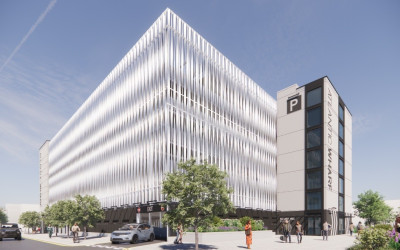
Major 900-space car park approved for Cardiff Bay regeneration scheme
Cardiff Council has appointed GOLDBECK Construction to deliver a major new multi-storey car park as part of the ongoing regeneration of Atlantic Wharf in Cardiff Bay.
Read more