
Why cutting down trees will not solve the UK’s subsidence crisis
Across the UK, thousands of healthy, mature trees are being cut down each year in the name of protecting homes from subsidence. The issue is especially acute in the clay areas of southern England, where trees extract moisture from the soil, causing it to shrink during dry spells and swell again when it rains. It’s a cycle that puts pressure on older, shallower foundations, leading to cracks and movement that can alarm homeowners and insurers writes Robert Wilkins, operations director at Ruskins, the soil and tree specialists.
But while trees are nearly always blamed, they are rarely the real culprit. The truth is more complex - a mix of climate extremes, inadequate foundations and industry misconceptions about what tree roots actually do.
Current estimates suggest that 4.5 million homes in England are at risk of subsidence, with that number expected to rise by more than a million as climate change drives hotter, drier summers and wetter winters. Insurance payouts already exceed £150 million annually, with around 60 per cent of claims blaming tree-root activity.
However, “tree-root activity” is often misunderstood. Trees do not dig into pipes or foundations out of malice, but respond to conditions. Roots follow moisture and in clay soils, where water availability can fluctuate dramatically, they will draw moisture laterally across the soil. When that happens beneath shallow foundations, ground movement can occur. This is a problem of soil physics and water balance, not tree behaviour
Why the industry’s default response fails
Although this is widely known, insurers and loss adjusters continue to take the same approach - if there’s subsidence and a tree nearby, remove the tree. The logic is simple - eliminate the perceived risk and the problem goes away, but this is a false economy.
Removing mature trees worsens the local heat effect, increases stormwater runoff and strips local areas of biodiversity and amenity. In a climate emergency, this knee-jerk reaction, is deeply counterproductive. The insurance sector’s focus on removal is driven more by practicality. You can’t sue the weather or the builder who laid foundations in 1930, but you can identify and remove a tree owned by someone. It’s a cleaner, cheaper claim resolution. even if it sacrifices valuable green infrastructure.
However, in some cases insurers will consider root barriers as a modern alternative to removal. These are physical layers, inserted between a tree and a building to stop roots encroaching. In theory, they can prevent future risk, protect services, or contain established trees. In practice, however, most are little more than root deflectors.
Roots, like water, take the path of least resistance. The majority of roots exist in the top 600mm of soil, where oxygen and nutrients are most available. Many commercial root barriers are only 600mm to 1,000mm deep, barely more than a thin fence in the ground. Roots simply hit them, travel sideways and then dive beneath, continuing on their way.
Ruskins’ experience shows that for a barrier to be genuinely effective - it must reach depths of around six metres - far deeper than where most products ever reach. Yet we know of only one company that installs to such depths. The rest of the market, driven by convenience and cost, continues to promote shallow systems that simply delay, not prevent, root interaction.
Even then, barriers are not a neutral intervention. They act like a high-security wall around a tree, restricting access to moisture, nutrients and beneficial fungi. Over time, this can weaken the tree’s stability and health.
A market built on misunderstanding
Much of the industry’s thinking about root barriers stems from standardised landscape CAD drawings that automatically include them next to trees and hard surfaces. These templates, often supplied free by root-barrier manufacturers, have become default references for architects and landscape designers. It’s a classic case of specification by convenience, not by science.
However, trees and soils do not obey PDF drawings. Every site has its own hydrology, foundation depth and soil structure. Installing a shallow barrier simply because the drawing shows one is not management - it’s box-ticking.
Instead of defaulting to barriers or felling, a more intelligent approach starts with the right tree in the right place. Avoid species known for surface rooting, like cherries, near structures. Give trees sufficient rooting volume and space. Manage canopy size through careful pruning that reduces water demand without compromising health.
Where roots interact with underground services, the issue is almost always a fault in the service - such as a cracked joint, or a leaking seal, that attracts roots seeking moisture. Repairing the fault addresses the cause. Wrapping or isolating key services in durable root barrier sleeves can help prevent re-entry, but the underlying problem is usually infrastructure, not vegetation.
Insurers could play a transformative role by recognising that felling is not the only or best risk-management strategy. Properly designed, deeply installed root barriers and improved soil management can protect both homes and trees. Updated technical standards should define correct barrier depths and installation practices, while grant schemes could help homeowners choose sustainable, tree-friendly solutions.
Equally, there must be closer collaboration between arborists, soil scientists, engineers and insurers. The “tree versus property” narrative helps no one.
The UK’s subsidence crisis is both a technical and cultural challenge. It reflects our failure to see trees as part of the solution rather than part of the problem. Cutting them down might seem decisive, but it leaves communities hotter, drier and poorer.
The smarter path lies in the understanding of soils, of water and of the quiet, but vital relationship between trees and the ground beneath us. Protecting homes should not mean destroying the very things that help them survive a changing climate.
Additional Blogs
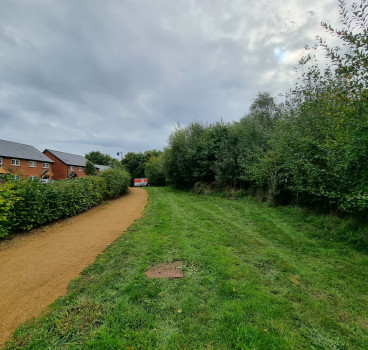
Designing with large trees and how architects can create immediate impact
Architecture is often judged by the relationship between buildings and their surroundings, but even an exceptional building can feel unfinished when it sits within a landscape of young trees, exposed...
Read moreThe numbers don’t lie: why industrial fire statistics demand a response
Every year the government publishes its fire statistics, and every year those of us in the fire safety sector read them with a mixture of curiosity and concern. Curiosity, because they represent an...
Read more
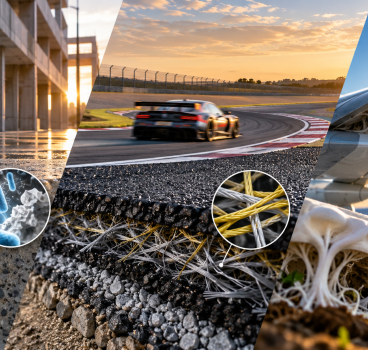
How Specialty Applications Drive Material Innovation
Standard materials sometimes fall short on construction projects, whether due to a specialty surface, an extreme-load environment or harsh, unconventional conditions. Demands like these have long...
Read more