
Why construction needs a new conversation about mental health
Every day, the construction industry solves problems that most people never see. Projects run to impossible deadlines, margins are squeezed, labour shortages continue to bite and safety remains paramount. Decisions made in minutes can have consequences that last for decades. However, while we often talk about the physical demands of construction, we spend far less time discussing the emotional weight carried by the people who keep the industry moving, even though the statistics suggest we should, writes John Ridgeway.
Research from organisations including the Chartered Institute of Building (CIOB), the Lighthouse Construction Industry Charity and Mates in Mind has consistently shown that mental health challenges are significantly more prevalent within construction than in many other industries. Long working hours, financial pressure, job insecurity, travelling long distances, isolation, workplace culture and the expectation to simply "get on with it" all contribute to an environment where stress can quietly become overwhelming.
For many people, asking for help still feels harder than carrying the burden alone, because we've become very good at fixing buildings, but less good at fixing ourselves.
Construction is an industry built on solving problems. When something goes wrong on site, experienced professionals identify the issue, develop a solution and move forward.
Many of us approach our own wellbeing in exactly the same way.We look for another productivity system, another motivational podcast, another resilience workshop, another time-management technique and another way to cope.
These things all have value, but perhaps we've been asking the wrong question. Instead of asking, "What more do I need to add to feel better?" perhaps we should be asking, "What am I carrying that I no longer need?"
A Different Way of Thinking
This is the central idea behind a new book, which challenges the idea that people have to think in a different way to feel good about themselves. It is called You're Not Broken by author Michael Younge. The book further challenges one of the biggest assumptions within the personal development industry - that we improve ourselves by continually adding more habits, more routines and more positive thinking.
Instead, it introduces what the author calls The Psychology of Subtraction. The idea is remarkably simple. Most people are not held back because they lack confidence. They are held back because confidence has been buried beneath fear. The book could have been written for people working within construction.
Most people are not missing resilience. It has simply become hidden beneath anxiety, self-doubt, comparison and unrealistic expectations. The book takes the idea that peace and personal growth is less about becoming someone new and more about removing what no longer belongs.
A Lesson Construction Already Understands
Interestingly, construction professionals should already understand this principle better than they may realise. Every successful project begins with preparation. Before foundations are poured, the site is cleared. Unstable ground is removed. Obstacles are dealt with.
Nobody would build a multi-million-pound development on weak foundations and simply hope everything works out. Yet many of us attempt to build happier, healthier lives while carrying years of accumulated stress, guilt, anger, unrealistic expectations and emotional exhaustion. It can be argued that the foundations matter just as much in life as they do in construction.
Mental health initiatives across construction have made enormous progress over the last decade. Companies are investing in Mental Health First Aiders and the Lighthouse Charity continues to provide vital support. Mates in Mind is helping organisations change workplace culture and the CIOB has worked tirelessly to raise awareness throughout the profession.
These initiatives save lives. However, perhaps there is room for another conversation alongside them. Rather than asking people to simply "be positive", perhaps we can encourage them to identify one unnecessary burden they could let go of - one fear, one resentment, one unrealistic expectation or one impossible standard.
Perhaps we should now be asking if removing one emotional weight creates far more change than adding another motivational slogan.
Nobody Is Broken
Construction has always been about creating structures that stand the test of time. Perhaps the same principle applies to people. The strongest individuals are rarely those who carry the greatest weight. They are often those who have learned what they no longer need to carry.
This is why I like this book because You're Not Broken leaves readers with just one thought. You do not need to become somebody else. You do not need another version of yourself.
You may simply need to uncover the person who has been there all along, because sometimes the most powerful form of positive thinking isn't adding more. It's having the courage to let go.
Frequently Asked Questions
1. Why is mental health such a big issue in the construction industry?
Construction is one of the UK's most demanding industries. Long hours, tight deadlines, financial pressures, job insecurity, travelling long distances and physically demanding work all contribute to higher levels of stress, anxiety and depression than many other professions. Research from organisations such as the CIOB, Lighthouse Construction Industry Charity and Mates in Mind has consistently highlighted the scale of the challenge.
2. What are the biggest causes of stress in construction?
Common causes include unrealistic project deadlines, labour shortages, financial uncertainty, demanding clients, long commutes, poor work-life balance and the pressure to constantly perform. Many workers also feel they must "get on with it" rather than discuss how they are feeling.
3. How can construction companies improve mental health in the workplace?
Employers can support mental wellbeing by creating an open culture, training Mental Health First Aiders, encouraging conversations, managing workloads realistically, promoting work-life balance and signposting employees to organisations such as the Lighthouse Construction Industry Charity and Mates in Mind.
4. What is the Psychology of Subtraction?
The Psychology of Subtraction is the idea that personal growth isn't always about adding more habits, techniques or motivation. Instead, it focuses on removing the unnecessary emotional burdens that hold people back, such as fear, self-doubt, unrealistic expectations, guilt and comparison.
5. Why do construction workers often avoid asking for help?
Construction has traditionally been associated with resilience, toughness and self-reliance. While these qualities are valuable, they can sometimes make people feel they should deal with problems alone, even when support would be beneficial.
6. What are the signs that someone in construction may be struggling with their mental health?
Changes in mood, increased irritability, tiredness, reduced concentration, withdrawal from colleagues, poor decision-making, increased absenteeism or noticeable changes in behaviour can all indicate that someone may be experiencing stress or mental health difficulties.
7. What support is available for construction workers experiencing mental health problems?
Several organisations provide specialist support, including the Lighthouse Construction Industry Charity, Mates in Mind and the Chartered Institute of Building (CIOB). Many employers also provide Employee Assistance Programmes (EAPs), Mental Health First Aiders and occupational health services.
8. Does improving mental health always require adding more techniques?
Not necessarily. While counselling, exercise, mindfulness and resilience training can all help, some psychologists argue that removing unnecessary emotional burdens can be equally powerful. Letting go of unrealistic expectations, fear or negative self-beliefs may create more lasting improvements than continually searching for the next self-improvement technique.
9. Why are confidence and resilience important in construction?
Construction professionals make important decisions every day, often under significant pressure. Confidence supports good decision-making, while resilience helps people recover from setbacks. However, confidence and resilience may already exist beneath layers of stress, anxiety and self-doubt rather than needing to be constantly built from scratch.
10. How can individuals reduce stress while working in construction?
Small daily changes can make a significant difference. Taking regular breaks, maintaining healthy sleep habits, talking openly with trusted colleagues, seeking support early, exercising regularly and identifying unnecessary pressures or unrealistic expectations can all improve wellbeing over time.
11. What role does workplace culture play in construction mental health?
A supportive workplace culture encourages people to speak openly about mental health without fear of judgement. Organisations that normalise conversations around wellbeing often see better employee engagement, improved retention, lower absenteeism and safer working environments.
12. What is the most important message for the construction industry?
The construction industry has become exceptionally good at building strong foundations for projects. Perhaps it's time to apply the same thinking to people. Good mental health isn't always about becoming someone different—it can be about recognising what no longer serves us, letting go of unnecessary emotional burdens and uncovering the confidence and resilience that may have been there all along.
Additional Blogs

Designing with large trees and how architects can create immediate impact
Architecture is often judged by the relationship between buildings and their surroundings, but even an exceptional building can feel unfinished when it sits within a landscape of young trees, exposed...
Read moreThe numbers don’t lie: why industrial fire statistics demand a response
Every year the government publishes its fire statistics, and every year those of us in the fire safety sector read them with a mixture of curiosity and concern. Curiosity, because they represent an...
Read more
How Specialty Applications Drive Material Innovation
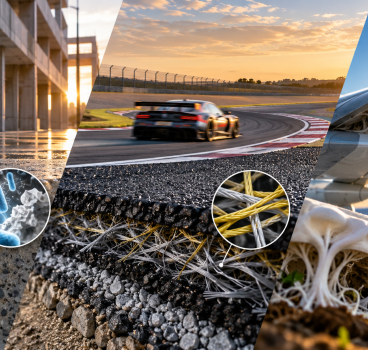
Standard materials sometimes fall short on construction projects, whether due to a specialty surface, an extreme-load environment or harsh, unconventional conditions. Demands like these have long...
Read more