
The future is now
It's an inalienable fact that just as the world keeps on turning so does our desire to continuously innovate. Staying ahead of the game is crucial if we are to succeed in helping our clients now and in the future, writes Darren Evans.
Disney Chairman Bob Iger once said: “The riskiest thing we can do is just maintain the status quo.” I was reminded of this when members of our team here at Darren Evans visited the National Self Build and Renovation Centre in Swindon. It's a good day out as the centre contains a huge amount of information with more than 250 manufacturers and suppliers exhibiting and explaining the different project stages of a development. It's also something that we encourage at the company, keeping our people abreast of new and emerging technologies.
This is important for us, as it is for our customers, so that we ensure they are fully supported with effective solutions and a robust service. It's centres and exhibitions like this which are a bellwether for change in the construction industry, showcasing areas of change. It's incredible to think that devices such as photovoltaic panels or wind turbines were once derided as the preserve of the hippy counterculture, yet today are ubiquitous in their application in residential and commercial developments.
For our assessor Anthony Dale, it was the ability to see the various building materials and techniques in the different stages of construction; really useful in helping to picture the specification on jobs that come in to us. “The show home was a great example of what can be used on the inside of a house which is a part of the build we don't normally get to see. Plus I was excited at seeing the new solar roof tiles on show.”
This comes as Elon Musk unveiled Tesla's new solar roof tiles that the company hopes will revolutionise the way we use green power in the home, predicted by some to be more efficient, durable and cost-effective than existing solar panels.
For our assessor Simon Evans, it was the new application of Smart technologies via the Internet of Things (IOT) that caught his interest as companies such as Apple, Google and Amazon are all heavily invested in the segment which covers everything from household appliances to cars and infrastructure. “In 2017, both home and business owners will rely more heavily on internet-connected products,” he said.
One example of this would be smart home thermostats that "remember" the temperatures you prefer, can sense when you're not around and will automatically adjust the climate in your home to save energy. Or the LIFX smart light bulbs which not only use less energy but can be managed remotely from a phone via the cloud and built-in WIFI to control lights at home or set on/off times.
Less dependence upon wiring via WIFI will radically alter a building's performance as will prefabrication and off-site construction techniques. There is also massive research in technologies such as localised carbon capture and artificial photosynthesis, which could one day curb society's need for fossil fuels and demonstrate the potential future uses of solar energy. It's an exciting time.
Additional Blogs
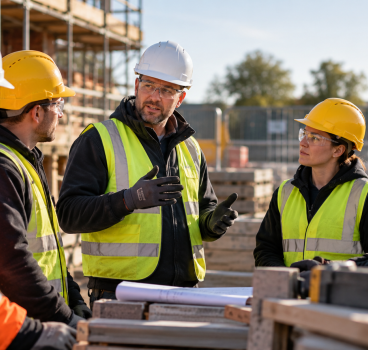
What Safety Culture Looks Like on a Small Site
Safety culture is usually discussed in relation to large contractors who have dedicated HSE teams and produce attractive induction videos. On a small crew - consisting of just a few trades and...
Read moreWhy Paint Booth Efficiency Has Become a Manufacturing Bottleneck in 2026
Your production line always seems to run smoothly until painted parts start piling up at the booth. While you've optimized fabrication and assembly, outdated access equipment and rising quality...
Read more

5 Construction Project Management Myths That Cost Crews Productive Time
Construction project management myths are pervasive, and the real cost is lost crew hours, not just lost money. Watch out for common misconceptions that can undermine your workforce's productivity...
Read more