
The engineering reality of urban agriculture on rooftops
As cities grow more dense and pressure on land intensifies, rooftops are being reimagined as productive spaces rather than forgotten voids. Urban farming has moved well beyond novelty rooftop herb gardens and community allotments. Today, it includes commercial-scale food production, hydroponic systems, rooftop greenhouses and mixed-use growing spaces integrated into residential, commercial and civic buildings writes John Ridgeway.
But while the idea of farming above the city is compelling, the engineering challenges behind it are often underestimated. Designing rooftops for urban agriculture is not simply a matter of adding soil and planting crops. It requires a fundamental rethink of structural design, water management, access, safety and long-term performance. When these challenges are addressed properly, rooftops can become resilient, productive assets. When they are not, they risk becoming costly liabilities.
The most immediate challenge is weight. Urban farming systems are significantly heavier than conventional roofs, even green roofs designed primarily for biodiversity or aesthetics. Soil depth, saturated growing media, crops at maturity, retained water, planters, greenhouses and people all add to the load.
Many existing buildings were never designed to carry this kind of weight. Retrofitting a roof for food production often reveals uncomfortable truths about structural capacity. Engineers must assess not only static loads, but dynamic loads caused by movement, wind interaction with crops or greenhouse structures and seasonal variations such as waterlogged soil after heavy rainfall.
For new buildings, designing with rooftop agriculture in mind from the outset makes the challenge far more manageable. Structural grids, column placement and slab thickness can all be optimised to support heavier loads without excessive material use. For existing buildings, compromises are often required, such as lightweight growing systems, shallow soil profiles or limiting cultivation to specific zones aligned with structural supports.
Balancing irrigation, drainage and risk
Water is central to any farming operation, but on a roof it becomes a complex engineering issue. Crops need consistent irrigation, yet roofs must shed excess water quickly to prevent ponding, leakage and structural damage.
Designing effective drainage is critical. Urban farms often retain more water than standard roofs, particularly when using deeper soils or hydroponic systems. Drainage layers, outlets and overflow routes must be carefully designed to cope with peak rainfall events while preventing root intrusion or blockages.
Irrigation systems also introduce risk. Leaks that might be inconvenient at ground level can be catastrophic several storeys up. Engineers must consider redundancy, leak detection, pressure regulation and easy access for maintenance. Increasingly, systems are being designed to integrate rainwater harvesting, allowing roofs to act as part of a wider building water strategy rather than isolated features.
All this means that urban farming places far greater demands on roof waterproofing than most other roof uses. The membrane must resist constant moisture, potential mechanical damage, fertilisers, microbial activity and aggressive root systems over decades.
Selecting the right waterproofing system is not just about product performance, but about buildability and inspection. Once a rooftop farm is operational, accessing the membrane becomes difficult and disruptive. This makes installation quality, detailing and testing absolutely critical.
Root barriers, protection layers and separation systems must work together as a tested assembly rather than a collection of individual components. Failure in one area can compromise the entire roof, often without immediate visible signs.
Wind, microclimate and crop performance
Rooftops are exposed environments. Wind speeds are higher, solar gain is more intense and temperature fluctuations are greater than at ground level. These conditions affect both structural design and crop viability.
Wind loading on greenhouses, trellises and tall crops must be carefully assessed, particularly on high-rise buildings. Crops themselves can act like sails, increasing uplift and lateral forces during storms. Engineers often need to collaborate closely with agronomists to select crop types and layouts that suit rooftop conditions.
Microclimate design is also becoming increasingly sophisticated. Wind breaks, shading systems and orientation all play a role in creating viable growing conditions while protecting the building structure beneath.
Urban farming rooftops are working environments. People will be lifting materials, moving equipment and spending long periods on the roof. Safe access is therefore non-negotiable.
Designers must consider stairs or lifts capable of moving produce, tools and growing media, not just people. Edge protection, fall restraint systems and safe maintenance routes need to be integrated without compromising usable growing space.
Fire strategy is another consideration, particularly where greenhouses or storage areas are involved. Roof layouts must allow for emergency access and comply with fire separation requirements, which can be challenging on constrained sites.
Furthermore, rooftop farms rarely operate in isolation. They interact with building services such as drainage, power, lighting, ventilation and sometimes heating. Greenhouses, for example, may require supplemental lighting or temperature control, adding to energy demand.
Well-designed schemes integrate these needs into the wider building strategy. Waste heat recovery, shared water systems and smart monitoring can turn rooftop agriculture into a contributor to building performance rather than a drain on resources.
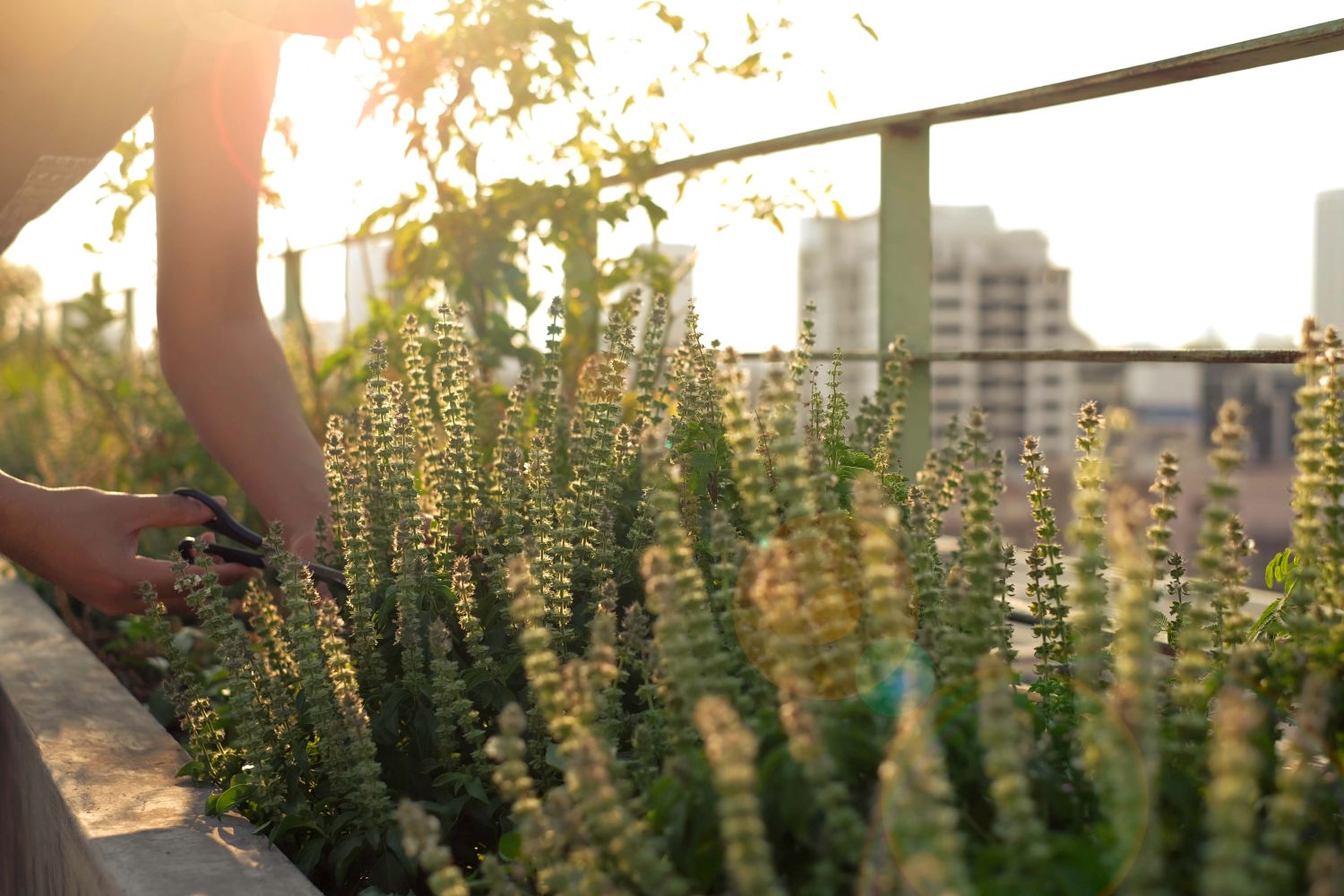
This level of integration requires early coordination between architects, engineers, services consultants and operators. Retrofitting services after the fact is expensive and often compromises efficiency.
Long-term maintenance and lifecycle thinking
One of the most overlooked challenges is long-term responsibility. Rooftop farms evolve over time. Crops change, operators come and go and systems are adapted. Engineers must design with flexibility and durability in mind.
Access for inspection, replacement of components and future upgrades should be considered from day one. A successful rooftop farm is not just one that thrives in its first year, but one that remains viable and safe for decades.
Lifecycle assessment is also increasingly important. While urban farming offers environmental benefits, these can be undermined if systems require frequent replacement or extensive maintenance. Durable materials, robust detailing and clear operational strategies are key to ensuring long-term value.
That said, urban farming on rooftops is no longer experimental. It is a growing part of how cities think about food resilience, sustainability and land use. But its success depends on acknowledging the engineering realities beneath the vision.
When structural capacity, water management, waterproofing, access and services are addressed holistically, rooftop farms can become productive, resilient assets. When they are treated as decorative add-ons, they risk failure, expense and disappointment.
For engineers, rooftop agriculture represents both a challenge and an opportunity. It demands cross-disciplinary thinking, early collaboration and a willingness to question standard roof design assumptions. As cities continue to grow upwards, the rooftops above them may become some of their most valuable landscapes, but only if they are engineered to support the life they are asked to sustain.
Additional Blogs
Designing with large trees and how architects can create immediate impact
Architecture is often judged by the relationship between buildings and their surroundings, but even an exceptional building can feel unfinished when it sits within a landscape of young trees, exposed...
Read moreThe numbers don’t lie: why industrial fire statistics demand a response
Every year the government publishes its fire statistics, and every year those of us in the fire safety sector read them with a mixture of curiosity and concern. Curiosity, because they represent an...
Read more
How Specialty Applications Drive Material Innovation
Standard materials sometimes fall short on construction projects, whether due to a specialty surface, an extreme-load environment or harsh, unconventional conditions. Demands like these have long...
Read more