
Is modern construction less durable than what we built 100 years ago?
Walk through almost any UK town or city and you will find buildings that have stood for a century or more. Stone facades still intact, brickwork still performing, structures that have endured weather, use and time with relatively little intervention. Now compare that to many modern buildings, where major refurbishment can be required within a few decades. Roofs replaced after 20 to30 years, facades needing remediation and systems reaching end-of-life far sooner than expected. It raises an uncomfortable question for our industry - are we building faster, but not better? Writes John Ridgeway.
Buildings constructed 100 years ago were not necessarily designed with a fixed lifespan in the way modern buildings often are. Many were built using materials such as solid brick, stone and timber, assembled with methods that prioritised mass, durability and repairability.
According to historical insights referenced by Encyclopaedia Britannica, traditional construction methods relied heavily on locally sourced materials and skilled craftsmanship. These buildings were often over-engineered by today’s standards, with thick walls, generous structural capacity and simple, robust detailing.
They were also designed to be maintained. Lime mortars could be repointed, timber elements repaired and individual components replaced without compromising the integrity of the whole structure. Durability was not just a by-product, it was part of the philosophy.
A Change Towards Efficiency and Standardisation
Modern construction operates under very different conditions. Projects are delivered at scale, under tight timeframes and within strict cost constraints. Materials are engineered for performance, but also for efficiency.
The rise of reinforced concrete, lightweight systems and prefabricated components has transformed how we build. These materials offer speed, consistency and reduced upfront cost, but they also introduce new considerations around lifespan and maintenance.
Research highlighted by the Royal Institution of Chartered Surveyors suggests that many modern building components are designed with defined service lives, often ranging from 20 to 60 years depending on the system. This is not necessarily a flaw, it is a reflection of how buildings are now planned and financed.
However, it does mark a clear shift. Buildings are no longer always designed to last indefinitely. They are designed to perform for a period, after which intervention is expected.
Modern materials are often stronger and more technically advanced than their historical counterparts. Reinforced concrete, for example, allows for greater spans and more flexible design. High-performance membranes provide effective waterproofing. Engineered systems can deliver precise outcomes, but strength does not always equal longevity.
Concrete can suffer from carbonation and reinforcement corrosion over time. Waterproofing systems can degrade if not maintained. Lightweight cladding systems may require replacement far sooner than traditional masonry.
Reports and commentary from organisations such as Building Research Establishment highlight the importance of maintenance and lifecycle planning in ensuring modern buildings achieve their intended lifespan. In other words, modern buildings can last,but only if they are actively managed.
The Role of Maintenance
One of the key differences between older and modern buildings is not just how they are built, but how they are maintained. Historically, buildings were maintained continuously. Repair was part of ownership. Materials and methods allowed for incremental intervention, extending the life of the structure over time.
Today, maintenance is often deferred. Budget constraints, fragmented ownership and competing priorities can lead to delays in addressing issues. By the time intervention occurs, problems may have escalated.
The National Audit Office has highlighted how deferred maintenance across public buildings contributes to growing backlogs and increasing costs. While this applies across sectors, it reflects a broader challenge: buildings are only as durable as the care
This is because modern construction often works to defined “design lives.” A building may be designed for 60 years, with individual components planned for replacement at intervals within that period.
This approach allows for flexibility and cost control, but it also changes expectations. Durability is no longer measured by whether a building stands for 100 years without intervention, but whether it performs as intended within its planned lifecycle.
This raises an important point. When we compare modern buildings to those built a century ago, we are not always comparing like for like. Older buildings that have survived are, in many cases, the best examples of their time. Others have been lost, replaced or significantly altered. What remains is a selection bias towards durability.
There is a growing perception that modern construction is less durable. In some cases, this perception is justified. High-profile issues such as cladding failures, structural defects and premature deterioration have raised concerns about quality and longevity.
However, the reality is more nuanced. Modern buildings are designed within a different framework, one that prioritises efficiency, adaptability and cost. Durability is still important, but it is balanced against other factors. The question is whether that balance has moved too far.
A Changing Set of Priorities
The industry is now facing new pressures. Sustainability, carbon reduction and resource efficiency are becoming central to construction. This is prompting a re-evaluation of how buildings are designed and built.
There is increasing interest in materials and methods that offer both performance and longevity. Retrofit is gaining attention as a way to extend the life of existing buildings. Designers are exploring how to create structures that are not only efficient to build, but durable and adaptable over time.
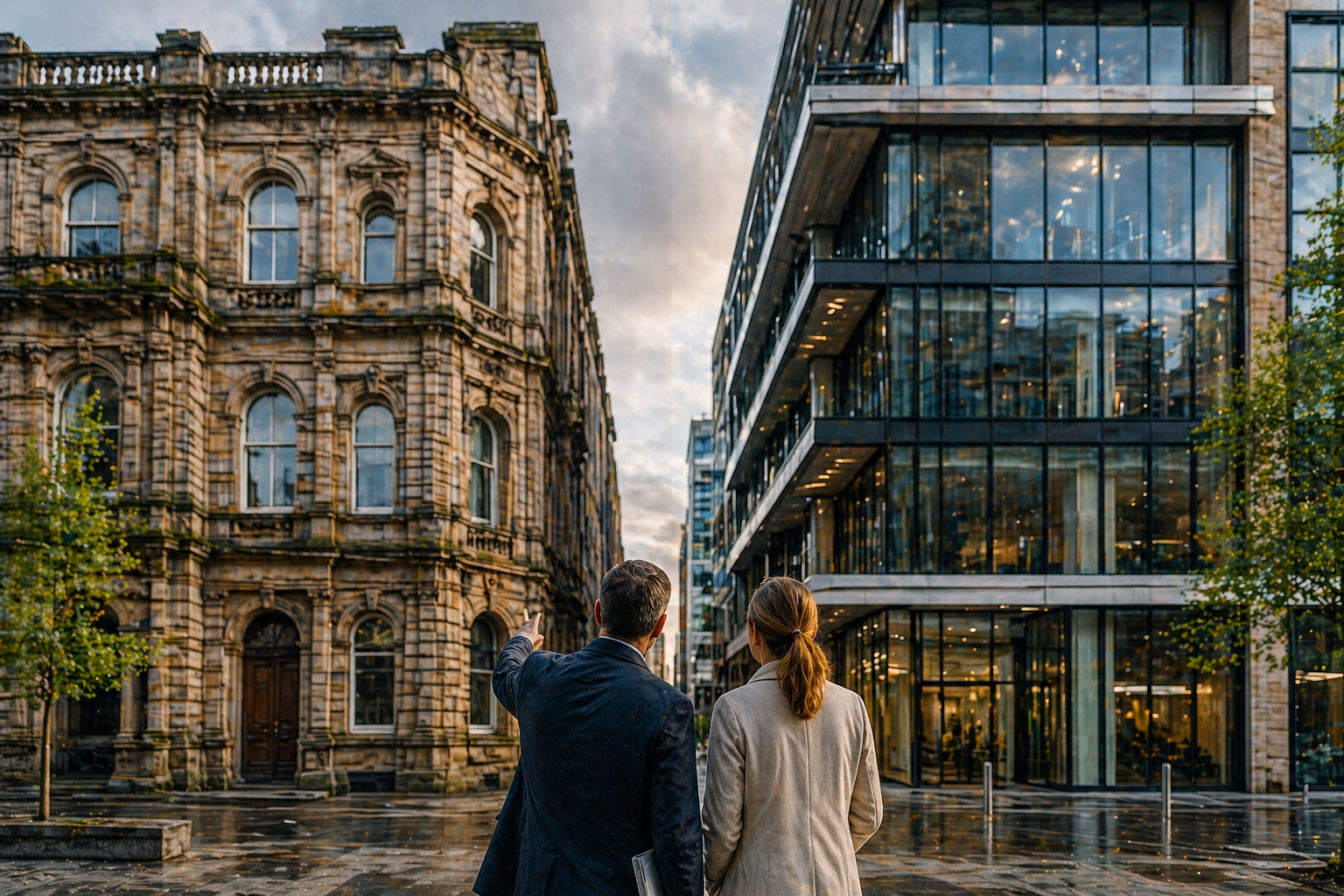
Organisations such as the World Green Building Council emphasise the importance of whole-life performance, rather than just initial cost or construction speed. This suggests a move back towards thinking about buildings as long-term assets.
So, is modern construction less durable? The answer is not straightforward. Modern construction is not inherently less durable, but it is different. It relies more on planned maintenance, defined lifecycles and engineered systems. When these are managed effectively, buildings can perform well over time.
However, when maintenance is deferred or systems fail prematurely, the perception of reduced durability becomes reality. Perhaps the more important question is not whether modern buildings last as long as those built 100 years ago, but whether we are designing and managing them in a way that allows them to.
The buildings that have lasted a century were not just well built, they were well maintained, adaptable and in many cases, over-engineered. Modern construction has achieved incredible advances in efficiency and capability, but in doing so, it may have moved away from some of the principles that supported long-term durability.
The challenge now is to bring those ideas back into focus, because in the end, durability is not just about materials or methods, it is about intent.
Frequently Asked Questions
1. Why do some 100-year-old buildings still last today?
Many historic buildings were constructed using durable materials such as stone, solid brick and timber, with generous structural capacity and repairable construction methods. Regular maintenance has also helped many survive for more than a century.
2. Are modern buildings less durable than older buildings?
Not necessarily. Modern buildings are designed using different materials, construction methods and performance standards. While many can achieve long service lives, they often rely on planned maintenance and the timely replacement of individual components.
3. Why do modern buildings require more maintenance?
Modern buildings use engineered systems, membranes, cladding and mechanical equipment that have defined service lives. Regular inspection and maintenance are essential to ensure these systems continue to perform as intended.
4. What is a building's design life?
A design life is the period a building or building component is expected to perform its intended function before major repair or replacement is required. Different elements within a building can have different design lives.
5. What is whole-life building performance?
Whole-life performance considers the total cost and performance of a building throughout its entire lifespan, including construction, operation, maintenance, refurbishment and eventual demolition or reuse.
6. Why were older buildings often more durable?
Historic buildings were frequently over-engineered, using thick masonry walls, robust structural elements and simple construction techniques. Many were also designed to be repaired rather than replaced, extending their lifespan significantly.
7. Does sustainable construction mean buildings should last longer?
Yes. Extending the lifespan of buildings reduces the need for demolition, reconstruction and new materials, helping to lower embodied carbon and improve the environmental performance of the built environment.
8. What causes modern buildings to deteriorate?
Premature deterioration can result from inadequate maintenance, water ingress, corrosion, weather exposure, poor detailing, material failure or defects introduced during design or construction.
9. Is retrofit more sustainable than demolition and rebuilding?
In many cases, yes. Retrofitting existing buildings can preserve embodied carbon, reduce waste and extend the useful life of structures, making it an important strategy for achieving net zero construction goals.
10. How important is building maintenance?
Building maintenance is critical to long-term performance. Regular inspections, repairs and planned maintenance help prevent small defects from becoming major structural or operational problems.
11. What can modern construction learn from historic buildings?
Historic buildings demonstrate the value of durability, repairability, adaptability and high-quality craftsmanship. These principles are increasingly influencing modern approaches to sustainable design and whole-life asset management.
12. Should buildings be designed to last 100 years or more?
Many industry experts believe buildings should be designed for long-term adaptability and resilience wherever practical. Creating structures that can be maintained, upgraded and repurposed over many decades supports sustainability, reduces lifecycle costs and improves long-term value.
Additional Blogs

The Robotics as a Service Revolution Is Reshaping Warehouse Infrastructure Requirements
Warehouse operators now rent automation equipment instead of purchasing it outright. These robotics as a service models provide access to advanced machines without major capital investments. As...
Read moreIs construction becoming brilliant at measuring everything except common sense
Construction has never had access to more information. We can track the progress of a project almost in real time. We can monitor costs, labour, productivity, programme performance, carbon, waste,...
Read more
Rewilding construction sites to boost local biodiversity
At a time when the UK is facing a serious decline in wildlife, the construction industry has an opportunity to rethink its relationship with the natural environment. So let’s ask the question - could...
Read more